
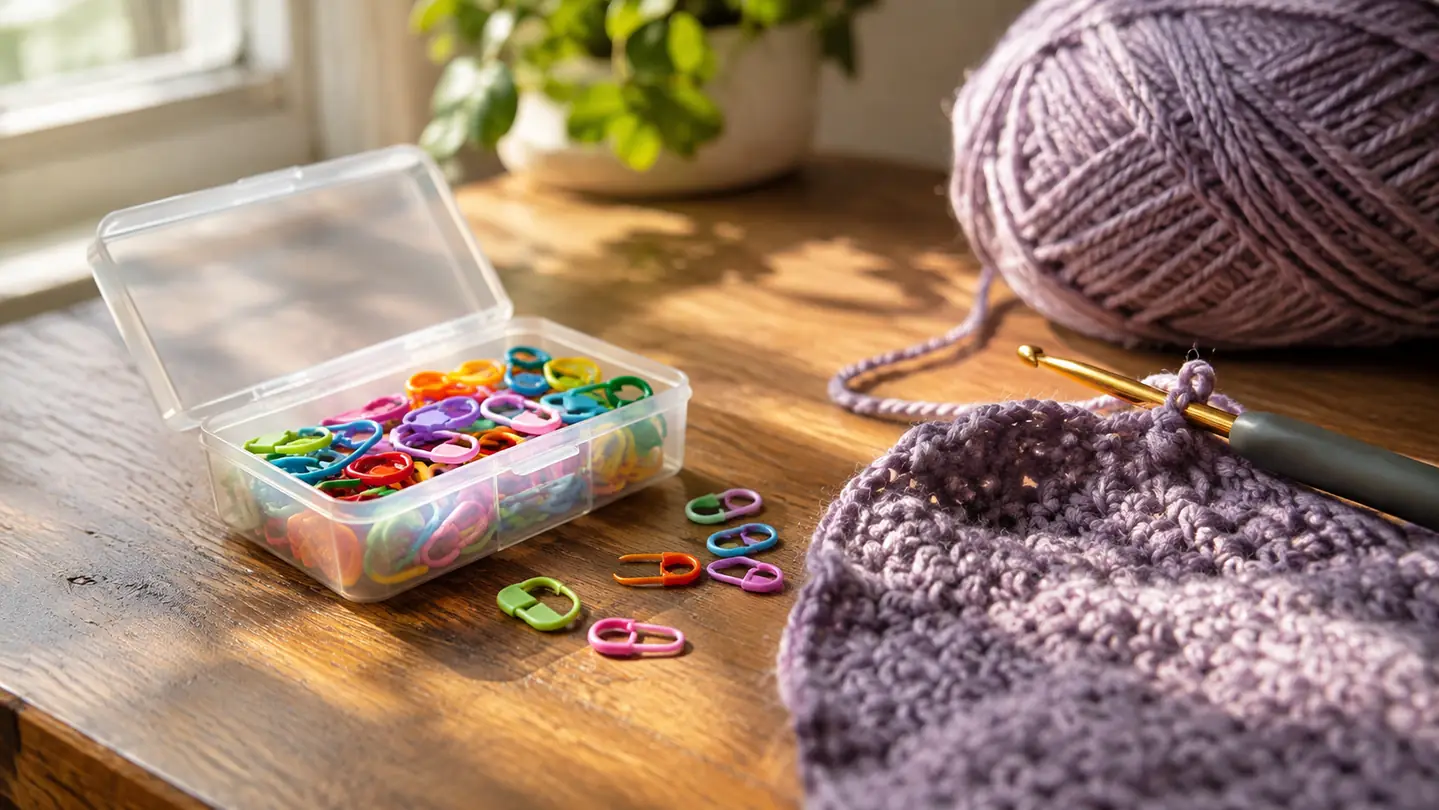
I have been crocheting for about 30 years, and for most of those years I kept my place in a row the way my aunt taught me: I counted out loud, I counted on my fingers, and when I lost my place I counted the stitches in the row below until my eyes crossed. It worked, most of the time. But last winter I started a blanket with a repeat of twelve stitches, and somewhere around row forty I realized I had been doing the same eleven-stitch repeat for three rows without noticing. That is when I finally ordered a box of Meikeer locking stitch markers, mostly out of frustration, and it turned out to be one of the most useful little purchases I have made for my craft in years.
I am Joanne Pruitt, a retired middle school math teacher in Worcester, Massachusetts, and I treat a crochet pattern the way I used to treat a word problem. I want to see the structure. I want to know where the repeat begins and ends. And I want to be able to check my work without ripping out three rows. The Meikeer markers do exactly that, and they do it in a way that costs almost nothing and takes up almost no room in my project bag.
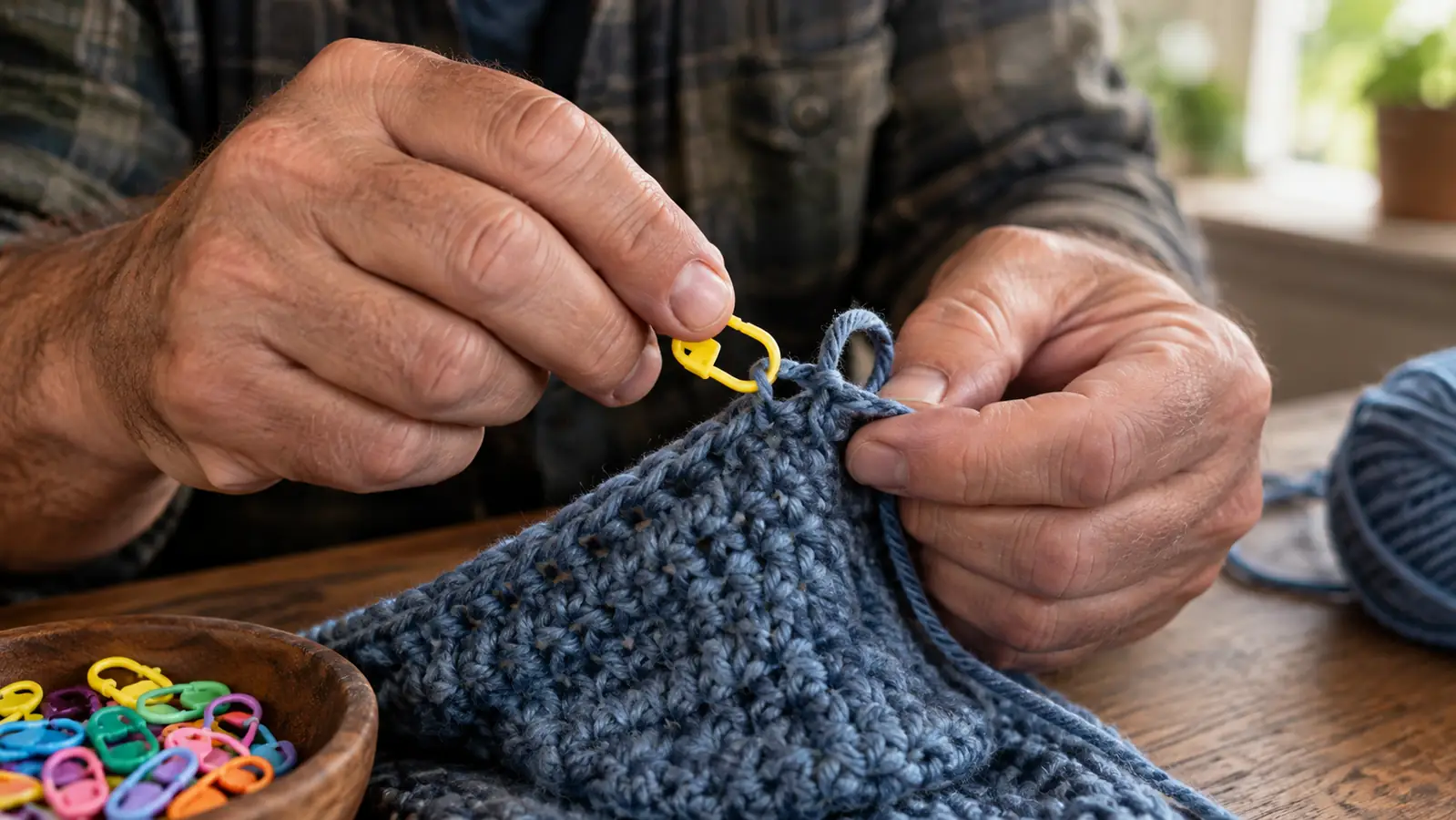
The box holds 150 markers in ten colors, which sounds like more than anyone needs until you are working on a blanket with a twelve-row repeat and you want a different color for each section. I use the bright ones for the start of a repeat and the softer ones for increases and decreases. The locking mechanism is the part that sold me. They close firmly enough that they stay put while I work, but they open easily with one hand, which matters to me because my right thumb joint gets stiff in cold weather.
I will be honest about one thing: I did not expect to care this much about a box of plastic markers. But the first evening I used them, I finished a full repeat without once counting the row below to find my place. That has not happened to me in years. The markers did not make me a faster crocheter. They made me a calmer one, because I stopped second-guessing every row.
The first evening I used them, I finished a full repeat without once counting the row below to find my place. That has not happened to me in years.
Stop losing your place in the middle of a row
A box of 150 locking stitch markers costs less than a skein of good yarn and saves you the one thing you cannot buy back: the time you spend counting the same stitches twice. See today's price on Amazon and keep your count where it belongs.
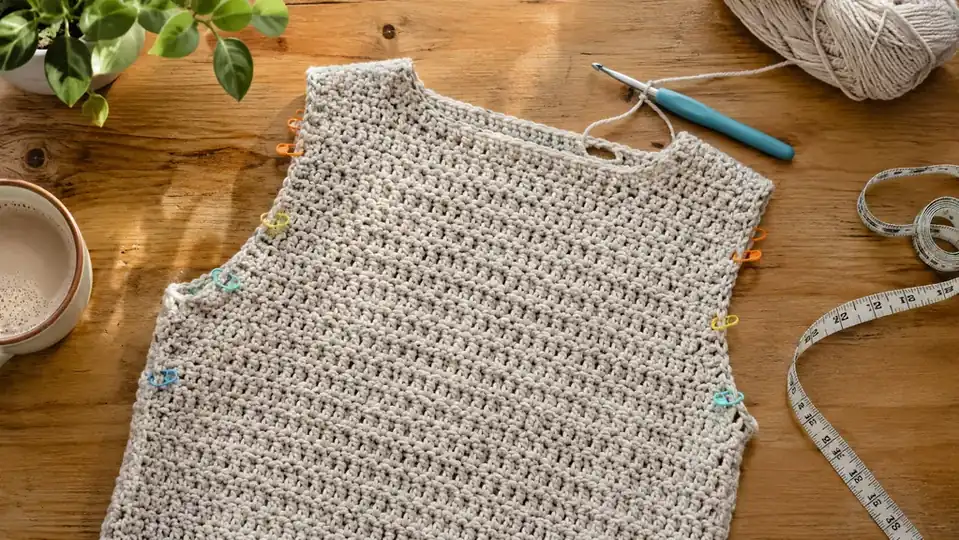
Amazon Check Today's Price on Amazon →Here is how I actually use them, because I think that is more useful than a list of features. When I start a new project, I put a marker in the first stitch of the foundation chain. Then I put one at the beginning of each repeat, one at each increase, and one at each decrease. For a dishcloth with a simple pattern, that might be four markers total. For a blanket with a twelve-stitch repeat, it might be twenty. The colors let me see the structure of the row at a glance, the way a good diagram shows you where you are in a pattern.
The markers are also the reason I stopped dreading the end of a row. I used to count every stitch in the row before I turned, because I was never sure whether I had actually finished the repeat or just thought I had. Now I count the markers instead. If the last marker is sitting in the last stitch, I turn my work and move on. It sounds small, but for someone who spent thirty years counting the same row twice, it is a genuine relief.
I have also used them for things they were not designed for, which I suspect is true of every crocheter. I have used them to hold a dropped stitch while I reached for a hook. I have used them to mark the right side of a piece of work. I have even used them to keep a ball of yarn from unraveling when I had to put a project down in a hurry. They are small, they are cheap, and they are always within reach because the storage box keeps them on my side table instead of lost at the bottom of a bag.
The only thing I would warn you about is the same thing I warn every new crocheter about: markers are a tool, not a substitute for understanding your pattern. You still need to know what the pattern is asking you to do. What the Meikeer markers do is remove the part of crocheting that makes people quit, which is the constant fear that you have lost your place and will have to rip out hours of work to find it again.
What I'd Tell You If We Were Sitting at My Kitchen Table
If you were sitting at my kitchen table with a cup of tea and a half-finished project, here is what I would tell you. You do not need a hundred and fifty markers to start. You need maybe six, and you can start with the ones that come in the box. But you do need markers that lock, because the little plastic rings that slip over the yarn will fall out of your work the moment you set it down. The Meikeer markers close firmly, they open easily, and they do not snag the yarn when you pull them out. That is the whole job, and they do it well.
I would also tell you to use the colors on purpose. Pick one color for the start of a repeat and a different color for increases and decreases. You will be able to read your work the way you read a pattern, and you will stop guessing whether you are on row six or row seven. That is not a promise that you will never make a mistake. It is a promise that you will catch it sooner, and sooner is always cheaper than later.
Give your hands a break from counting the same row twice
The Meikeer locking stitch markers are the kind of small tool you do not realize you needed until you use them once. Check today's price on Amazon and see if they do for your project what they did for mine.
Amazon Check Today's Price on Amazon →