
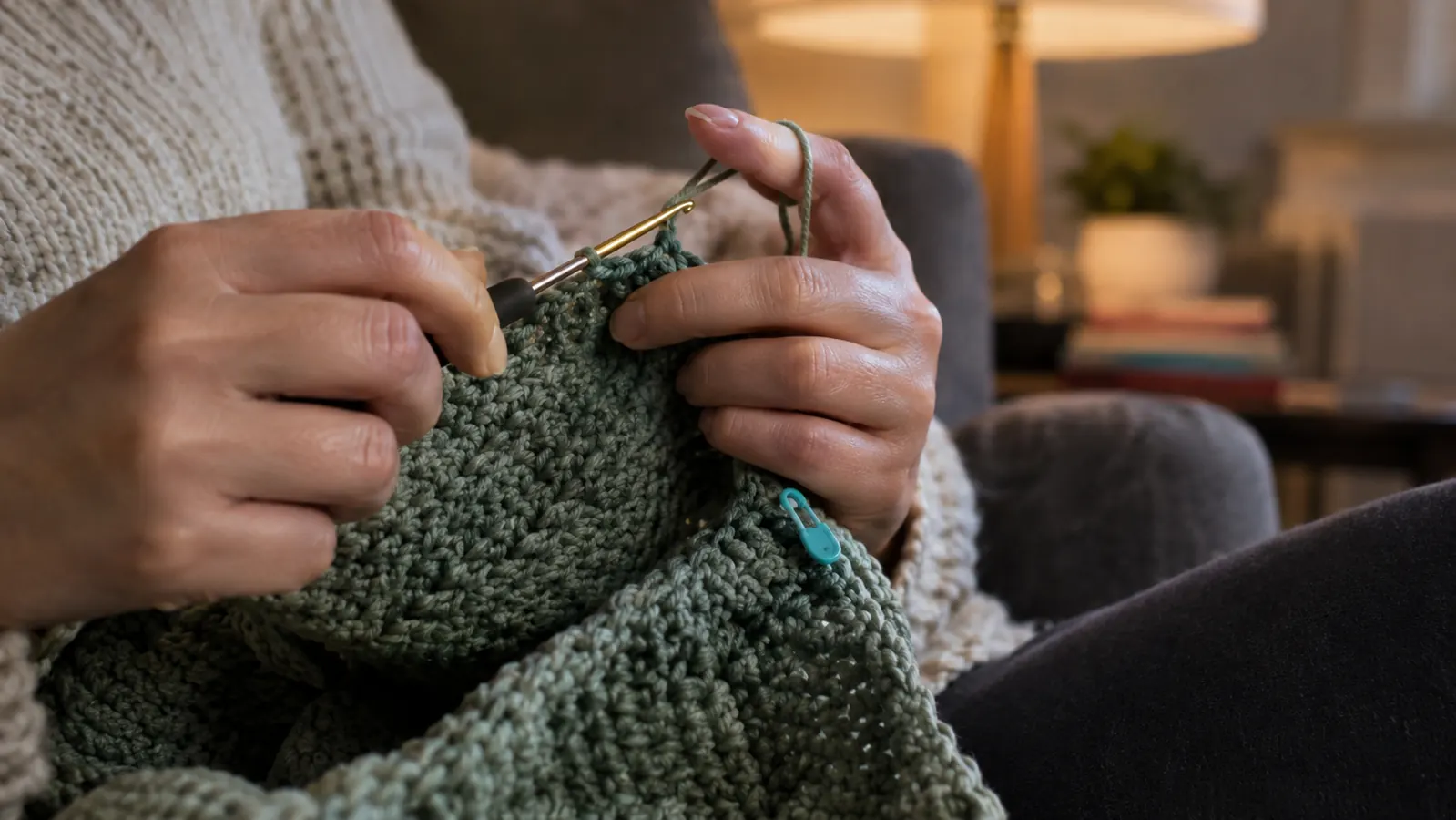
I spent 30 years teaching middle school math, so I know a thing or two about keeping track of numbers. And for most of my crochet life, I kept track of stitches the hard way: counting and recounting, losing my place, and ripping back rows because I trusted my memory instead of a marker. The Meikeer locking stitch markers changed that for me, and they changed it for good.
Stop trusting your memory with your stitch count
A set of 150 locking stitch markers means you always have one within reach, whether you are working on a blanket, a hat, or a baby gift for the church drive.
Amazon Check Today's Price on Amazon →They clip on and stay put, even in a project bag
The locking mechanism is the whole point. These markers close securely, so they do not pop open when you stuff your work into a bag or when the yarn slides past them. I have had plain open markers fall off in my project bag more times than I can count. These stay where I put them. Last fall I carried a half-finished blanket in my tote for a week, in and out of the car, and every marker was exactly where I left it when I finally sat down again.
You can mark the right side of your work without guessing
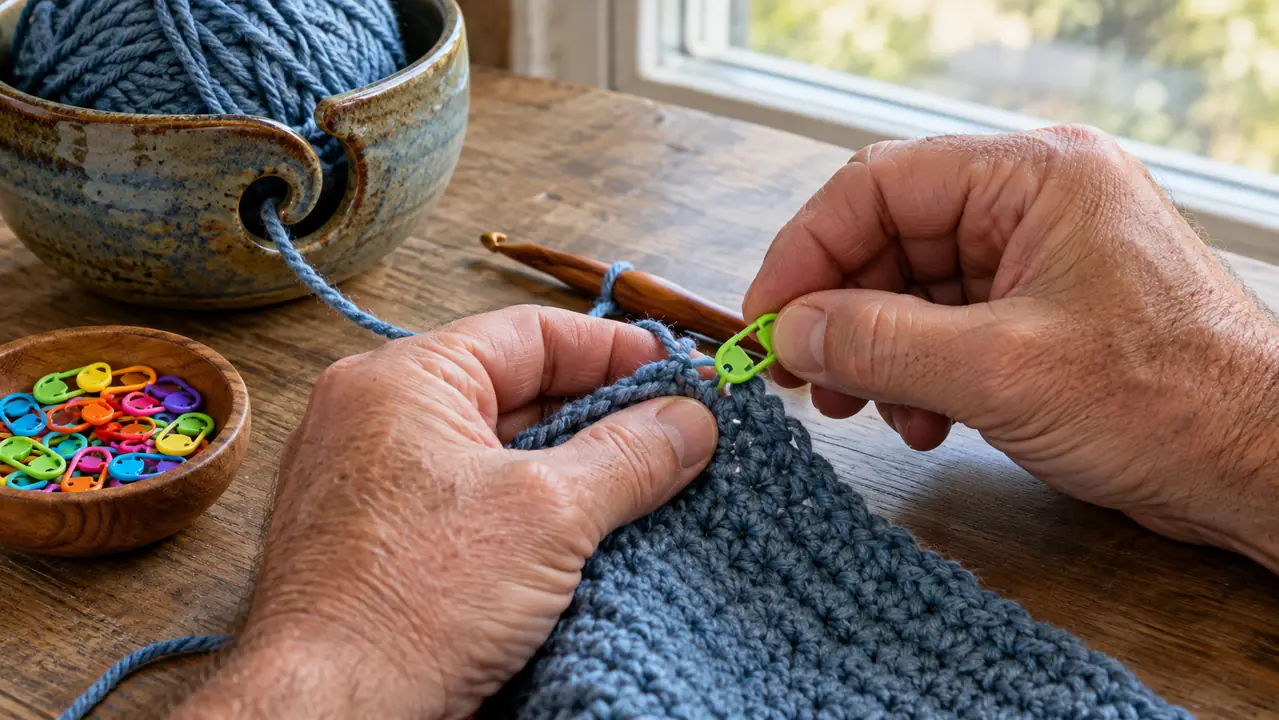
When I am working a pattern that has a textured stitch, it is easy to lose track of which side is which. A locking marker clipped to the front of the fabric tells me at a glance. No more holding the work up to the light and squinting. I started doing this on a shell-stitch baby blanket in January, and it saved me from turning the work the wrong way at least a dozen times before I finished it.
They mark increases and decreases without leaving a hole
Open markers have to sit in the stitch itself, which can stretch the yarn. A locking marker clips over the post or the edge of the work, so it does not distort the fabric. That matters when you are making a hat and the increases need to stay neat. I used them on a beanie with eight increases per round, and the crown came out smooth because the markers never pulled at the yarn the way open rings do.
The colors let you set up a counting system
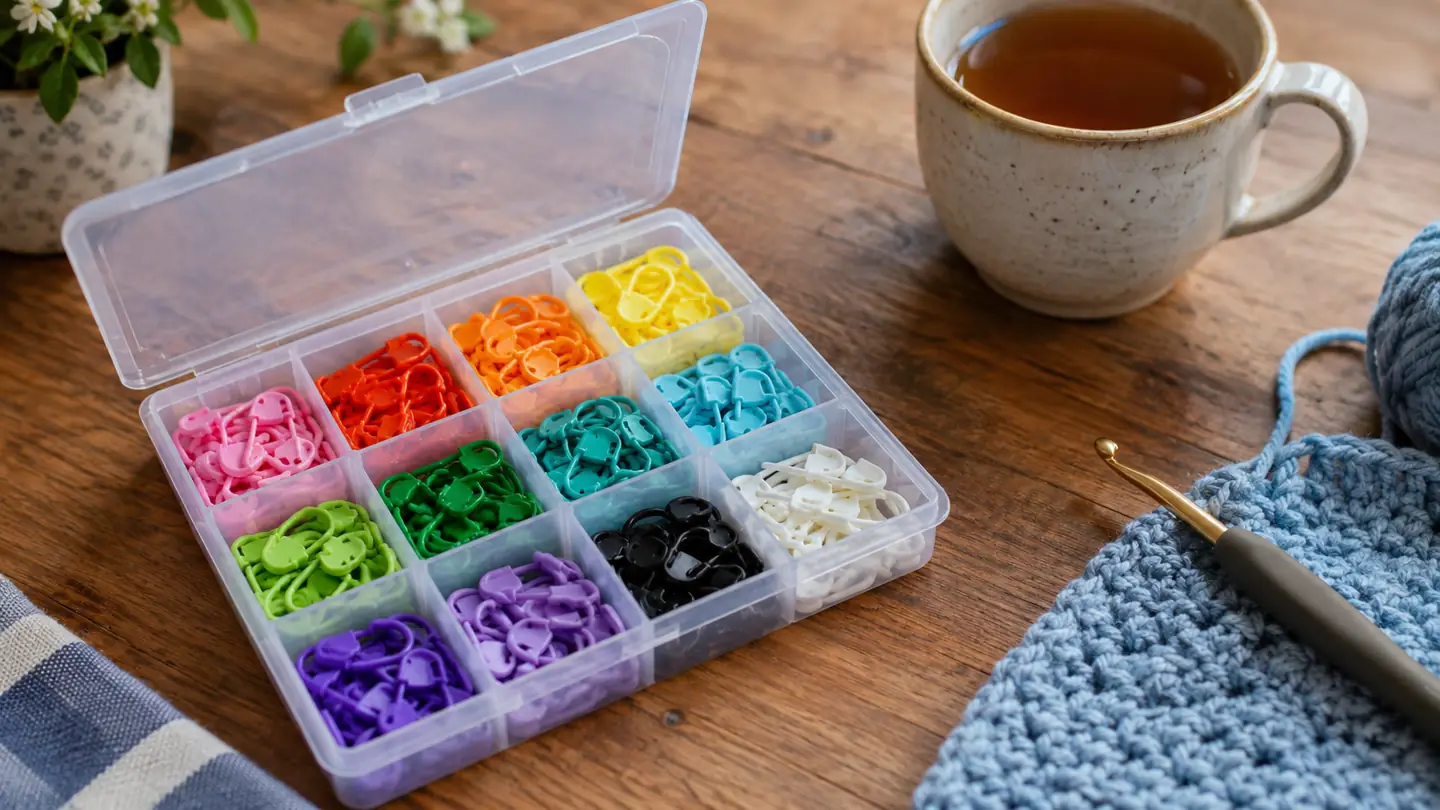
This is the math teacher in me talking. I use one color for the start of a round, another for every tenth stitch, and a third for a place where I need to stop and check my work. With 10 colors in the box, you can build a system that works for any pattern. On a ripple afghan I started in March, I used four colors: one for the start, one for each of the three repeat sections. I could count the repeats at a glance instead of starting over from the beginning every time.
They are easy to open one-handed
My right thumb gets stiff in cold Massachusetts weather, so I appreciate a marker I can open with one hand while the other hand holds the hook. The locking mechanism has just enough give. I can clip and unclip without wrestling with it. On a damp morning in February, when my thumb was at its worst, I still managed to move a marker up a round without setting down my work. That is the test I use for every tool now.
They work as stitch counters when you are working in the round
When I am crocheting a hat or a blanket in the round, I clip a marker at the start of each round and move it up as I go. It is the same habit I used to teach my students: write down the answer, then check it. The marker is my written answer. On a 60-stitch round, I count to the marker, not to the end of the row, so a phone call or a knock at the door does not cost me the whole round.
They are light enough to leave in the work while you try it on
Some markers are heavy enough to pull on the fabric. These are light, so I can leave them in place while I hold a hat up to check the fit or drape a blanket over the arm of the couch. The work hangs naturally and the markers stay put. I checked a hat against my own head three times while making it, and the fabric never sagged where the markers were clipped.
The storage box keeps the whole set in one place
I keep the box in the basket next to my recliner. When I need a marker, I open the box, take one out, and put it back when I am done. No more hunting through the couch cushions or finding a stray marker in the laundry. The box has little compartments, so I can sort by color. That sounds fussy, but it means I can grab the exact color I use for the start of a round without digging.
They make frogging less painful
When I do have to rip back a few rows, the markers tell me exactly where I was. I can see which stitch was the start of the round and which increase I had just made. It turns a frustrating moment into a quick fix. Last month I caught a mistake two rows down on a dishcloth, and because the markers marked the repeat, I ripped back to the marker instead of to the beginning. It took five minutes instead of an hour.
They are cheap enough to keep a few everywhere
With 150 markers in the box, I keep a handful in my project bag, a few in the kitchen drawer for when I crochet at the table, and the rest in the storage box. I never have to ration them or worry about losing one. I also tuck a few into the gift bags when I give away a hat or a blanket, so the new owner can mark their own rows. That little extra has been appreciated more than I expected.
What I'd Skip
If you only ever crochet simple rows of single crochet and never lose your place, you might not need a big set of markers. A few basic ones would do. But if you work in the round, follow written patterns, or make gifts where the stitch count has to be right, the Meikeer set is worth keeping close. I would skip the fancy electronic counters and just use these. They never run out of battery, they do not need a charger, and they work the same on the third project as they did on the first.
The marker is my written answer. I clip it, I check it, and I do not have to trust my memory.
Keep your count without keeping it in your head
The Meikeer locking stitch markers are the tool I reach for every time I start a new project. They are simple, they work, and they save me from ripping back rows.
Amazon Check Today's Price on Amazon →