
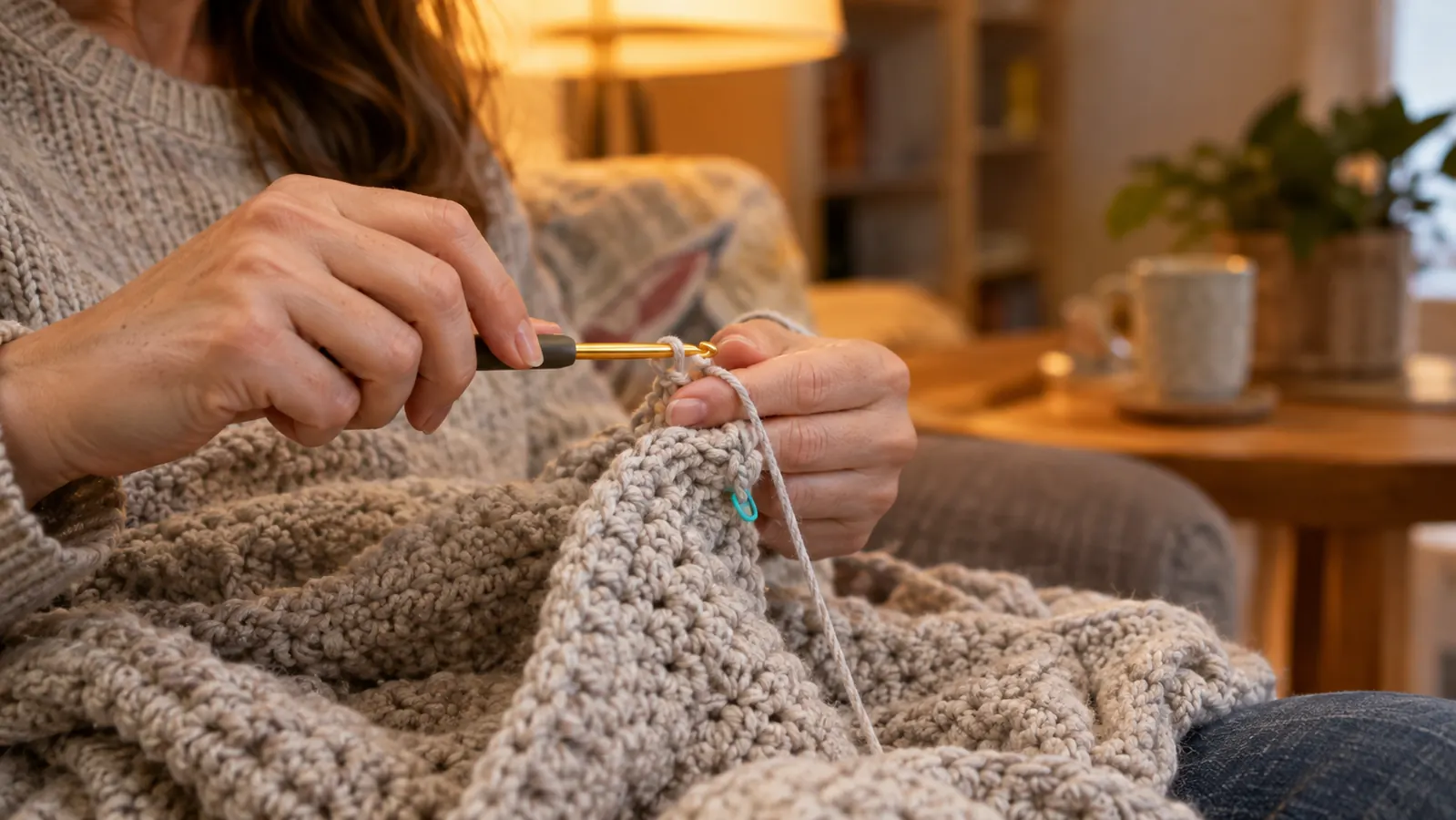
I have been crocheting for about 30 years, and for most of that time I counted rounds the way my aunt taught me: by muttering numbers under my breath and hoping nobody asked me a question mid-row. Then last year I finally bought a set of Meikeer locking stitch markers, the 150-piece box with the storage case, and I have used them on every single project since. This is my honest review after a full year of daily use, written from my recliner in Worcester, Massachusetts, where I do most of my crochet under a floor lamp with my husband Glenn reading beside me.
If you have ever ripped out three rows of a blanket because you lost count at round 14, you already know why stitch markers matter. The question is whether a budget-friendly set like this one holds up, and whether the locking mechanism is worth the extra step compared to the simple open rings I used for years. I have strong opinions on both, and I will get to them.
The Quick Verdict
The Meikeer locking stitch markers are the best value in my yarn bag. The locking clasp stays put through a whole blanket, the colors are easy to tell apart, and the storage box keeps my couch from becoming a marker graveyard. They are not the smoothest markers I have ever handled, and the smallest size is genuinely fiddly, but for the price and the sheer quantity, I would buy them again tomorrow.
Amazon Check Today's Price →Stop losing your place in the middle of a row
After a year of testing, the Meikeer locking stitch markers are the ones I reach for every single time. They clip on, they stay put, and the 150-piece box means I never have to hunt for a marker mid-project.
Amazon Check Today's Price on Amazon →How I've Used It
I bought the Meikeer set in early January, and in the twelve months since, I have used them on four blankets, six hats, three pairs of fingerless mitts, and a stack of baby squares for my church's donation drive. That is the kind of volume that shows you exactly what a tool is made of. The markers have been clipped into worsted weight yarn, chunky chenille, and fine baby yarn, and they have been left in place for days at a time when a project sat waiting for me.
My usual system is simple. I place a marker at the first stitch of each round, and when I come back around, I move it up. For patterns with repeats, I use different colors to mark the beginning of each section. The Meikeer set comes in ten colors, which is more than enough for even the busiest pattern. I also use them as placeholders when I have to put a project down mid-row, which happens more often than I would like with a house to run.
The locking mechanism is the feature I was most curious about, because my old open rings would occasionally pop off when a blanket was stuffed into a project bag. In a full year, I have not had a single Meikeer marker come unclipped on its own. The little clasp takes a firm squeeze to open, which is exactly what I want from a marker that is supposed to stay where I put it.
One thing I did not expect was how much the storage box would matter. I keep the clear case on the end table next to my recliner, and the compartments mean I can sort markers by color instead of digging through a tangle at the bottom of my project bag. On a Tuesday in March, I was halfway through a hat when I realized I needed a second color to mark a decrease section. I opened the case, found the yellow markers in the second compartment, and was back to crocheting in under a minute. With my old setup, that same search would have meant emptying the whole bag onto the couch.
What Makes the Meikeer Markers Different
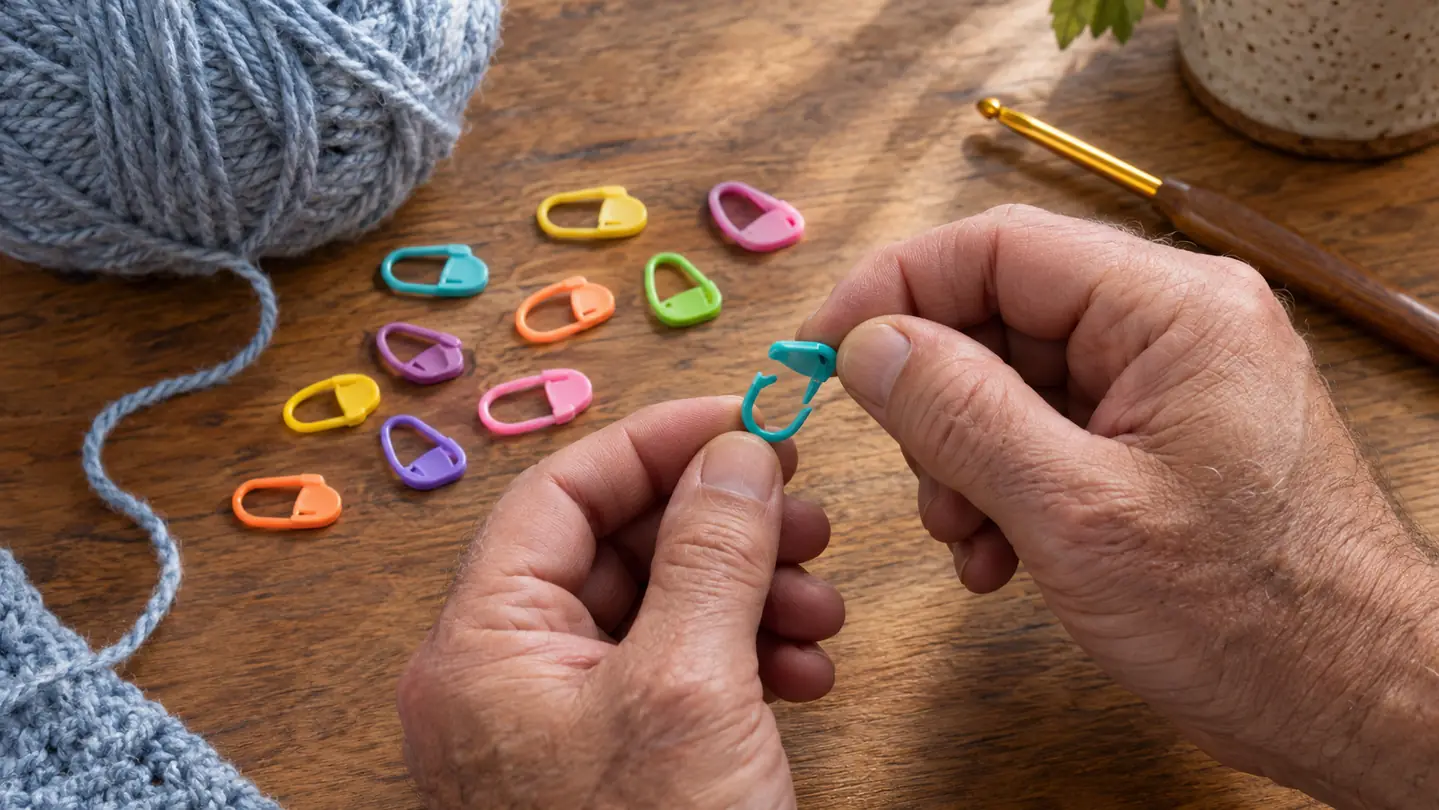
The first thing you notice is the locking clasp. Unlike the simple split rings that just slide over a stitch, these have a small plastic arm that clicks shut. That means they stay on the stitch you put them on, even when the project gets tossed into a bag or handled roughly. For a blanket that lives on my lap and gets shifted around constantly, that is the difference between a marker that helps and a marker that is just decoration.
The second thing is the color range. Ten colors in one box means I can assign a meaning to each one. Red for the start of a round, blue for an increase, yellow for a decrease, green for a pattern repeat. When I am working on a complicated baby blanket with multiple sections, I can look down and know exactly where I am without counting a single stitch. For a retired math teacher, that is a small joy.
The third thing is the storage box. The Meikeer set comes in a clear plastic case with compartments, so the markers are not rolling around loose in my project bag. I keep the case on the end table next to my recliner, and when I need a marker, I open the lid and grab one. When I am done, they go back in the case. It sounds obvious, but it has saved me from losing more markers than I care to admit.
I should also mention the sizes, because the box does not just give you 150 identical markers. There is a real range, from tiny ones meant for fine lace weight yarn up to larger ones that sit comfortably on a chunky chenille blanket. That range is what makes the set work for so many different projects. I keep the small ones in their own compartment and reach for them only when I am working with baby yarn, and I use the medium and large sizes for almost everything else.
How the Markers Hold Up Over Time
After a year of use, I can report that the Meikeer markers show very little wear. The plastic has not cracked, the locking arms still click shut with the same firmness as the day I opened the box, and the colors have not faded or transferred onto my yarn. I have washed two finished blankets with markers accidentally left in place, and the markers came through the wash without any damage to the blanket or to themselves.
The one thing I have noticed is that the smallest size in the set is genuinely small. The package includes a range of sizes, and the tiniest ones are hard for my fingers to open, especially on a cold morning when my right thumb joint is stiff. I use the medium and large sizes for most of my work, and I save the small ones for fine yarn projects where a bigger marker would stretch the stitch.
I have also dropped markers on the floor more times than I can count, and I have stepped on a few. None have broken. The plastic is flexible enough to survive being stepped on, which is more than I can say for some of the glass and ceramic markers I have tried in the past.
The only real wear I have found is on the markers I use most, the medium size in the colors I reach for first. After about nine months, a couple of them developed a slightly looser feel when I opened and closed them, but they still hold their grip on the yarn. I have not had to retire a single marker, and I have not lost one to a broken clasp. For a tool that costs pennies apiece in a set this size, that is a better track record than I expected.
The Math Teacher's Take on Counting
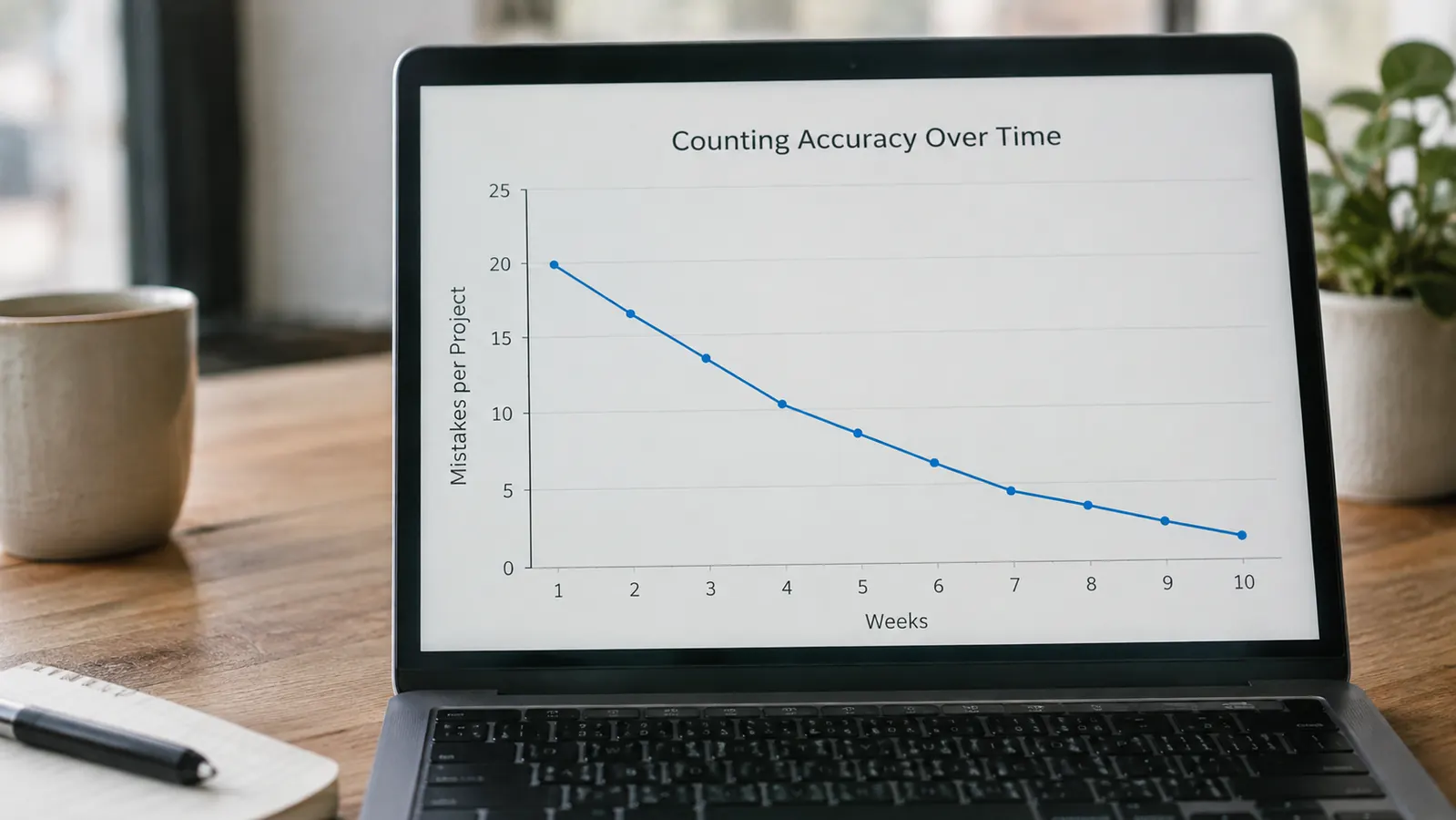
Here is where I get a little nerdy. In my thirty years of crochet, I have learned that the most common mistake is not a missed stitch, it is a lost count. You get distracted by the television, or someone asks you a question, and suddenly you are staring at a row of stitches with no idea where you are. A stitch marker at the start of each round turns that problem into a simple visual check. You do not have to remember the number, you just have to look.
The Meikeer markers are particularly good for this because the locking clasp means the marker stays exactly where you put it. With my old open rings, a marker could slide along the row and end up two stitches away from where I left it, which defeated the whole purpose. With the locking mechanism, the marker is still marking the same stitch when I come back to it, even if the project has been moved around.
I also use them for counting rows on repetitive patterns. When I am making a hat that requires twelve rounds of single crochet, I place a marker every three rounds. That way I only have to count to three at a time, which is much easier than counting to twelve while watching a movie. It is the same principle I used when I taught my students to break a big problem into smaller pieces.
Let me give you a concrete example from last fall. I was making a baby blanket with a shell stitch repeat that ran across 120 stitches, and the pattern called for an increase at the same spot in every row. The first time I tried it, I marked the increase spot with a scrap of contrasting yarn, and by the third row the scrap had worked its way loose and I was back to counting from the edge. I ripped out two rows before I admitted the system was not working. I switched to a Meikeer marker in a bright color clipped right into the increase stitch, and I finished the rest of the blanket without a single miscounted row. That one project convinced me the locking clasp was not a gimmick.
Who This Is For
The Meikeer locking stitch markers are for anyone who has ever lost their place in a project and wished they had a better system. They are especially good for beginners, because they take the anxiety out of counting. When you are learning to crochet, the last thing you need is to be unsure whether you are on round six or round seven. A marker at the start of each round gives you a visual anchor.
They are also great for people who crochet in social settings, like a yarn shop table or a church group. The locking clasp means the markers stay put even when the project is passed around for someone to admire. And the ten colors make it easy to mark different sections of a pattern without having to remember which color means what.
I would also put people who crochet while watching television in this group, because that is exactly the situation where counts get lost. When I am halfway through a movie and I look down at my lap, I want to know at a glance whether I have finished the round. A marker clipped at the start of the round answers that question without me having to count a single stitch. For me, that is the whole point of the tool.
Who Should Skip It
If you only crochet simple projects that you can finish in one sitting, you may not need a box of 150 markers. A few basic split rings would do the job. And if you have arthritis or very limited hand strength, the locking mechanism requires a firm squeeze that might be uncomfortable. The smallest size in particular is hard to open, so I would recommend trying a single marker before committing to the full set.
I would also say that if you prefer the look of wooden or ceramic markers for gift projects, these plastic ones are not going to replace them. They are practical tools, not decorative ones. But for everyday crochet, they are the ones I reach for.
One more honest note. If you are the kind of crocheter who keeps a single project going for months and never carries it anywhere, you could get by with a handful of markers instead of 150. The quantity is part of the value here, but it is only a value if you actually use it. I use mine because I always have several projects in rotation, and I like being able to leave markers in place when I set a project aside.
What I Liked
- Locking clasp stays put through a whole project, even in a bag
- Ten colors make it easy to mark different sections of a pattern
- Storage box keeps the markers organized and off the couch
- 150 pieces is enough for even the most marker-hungry project
- Survived a year of daily use, including a trip through the wash
Where It Falls Short
- Smallest size is genuinely hard to open, especially with stiff hands
- Plastic construction is not as pretty as wooden or ceramic markers
- The locking mechanism takes a firm squeeze that may not suit everyone
In a full year, I have not had a single Meikeer marker come unclipped on its own. That is the whole job, and they do it.
The markers I reach for every single time
After a year of testing, the Meikeer locking stitch markers are still clipped into whatever I am working on. If you are tired of losing your count, this is the easiest fix I know.
Amazon Check Today's Price on Amazon →