
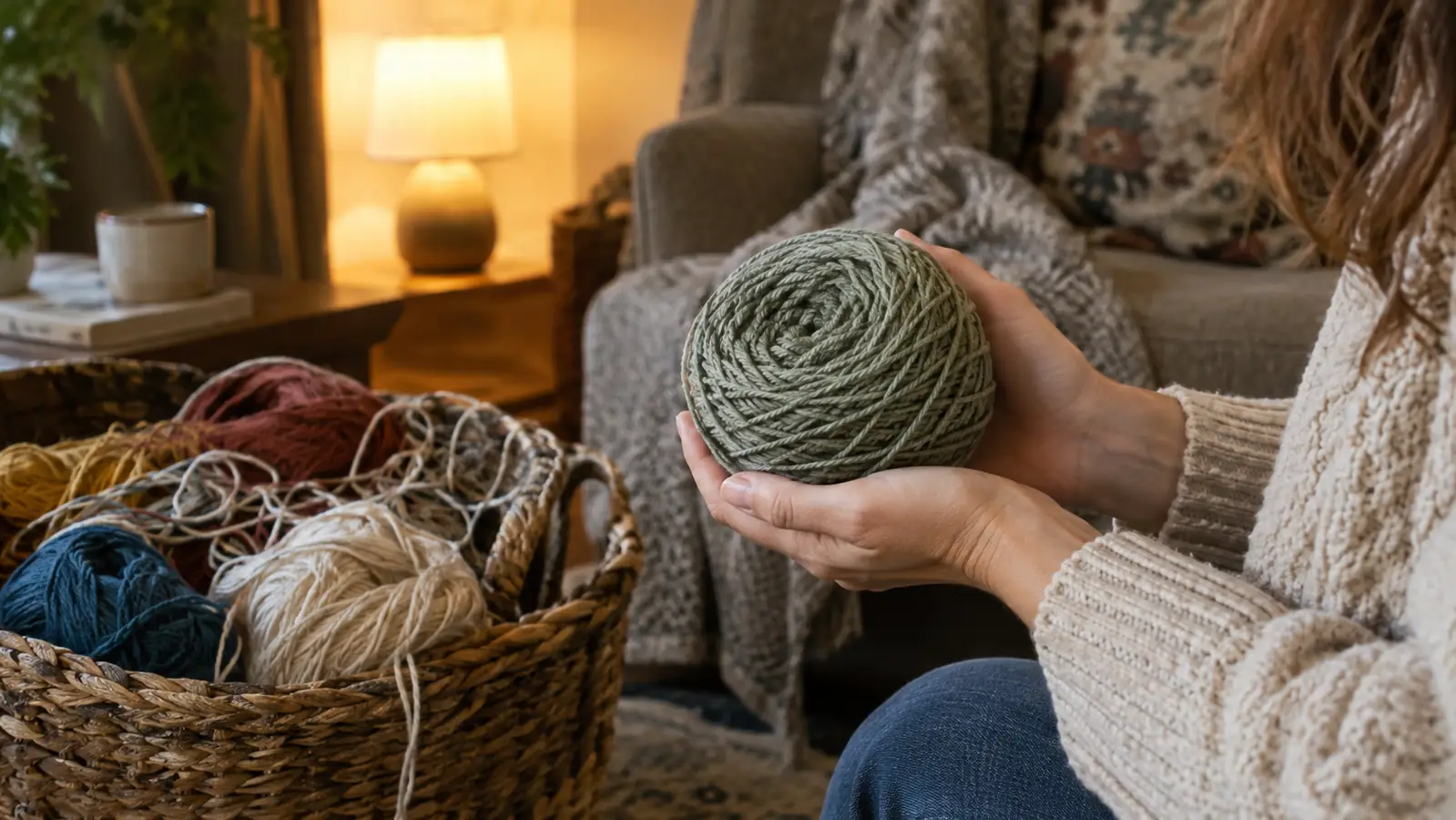
I have been crocheting for about 30 years, and I can tell you the exact moment I stopped being stubborn about yarn winders. It was a Tuesday night in January, the floor lamp was on, and I was three rows into a baby blanket for my church's donation drive when the skein on my lap did something I still think about with a small shiver. It collapsed. Not gracefully. It rolled off my knee, hit the rug, and by the time I picked it up, the working yarn had wrapped itself around the center of the skein in a knot that took me forty minutes to untangle. Forty minutes. I sat there in my recliner, holding that mess, and I finally said out loud to no one: this is not a character flaw, this is a tool problem. The fix turned out to be a Knit Picks yarn ball winder, and it took me far too long to buy one.
I had avoided a yarn winder for years because I told myself it was an extra step. I am a retired middle school math teacher, so I like efficiency. I like a clean word problem with a neat answer. A winder felt like buying a calculator to do addition you could already do in your head. But here is what I learned the hard way: a skein is not a stable object. It is a long strand of yarn folded into a loose twist, and the moment you pull from the outside, you are asking that twist to hold itself together while you work. Sometimes it does. Sometimes it does not. And when it does not, you are not crocheting, you are doing emergency surgery on a pile of yarn.
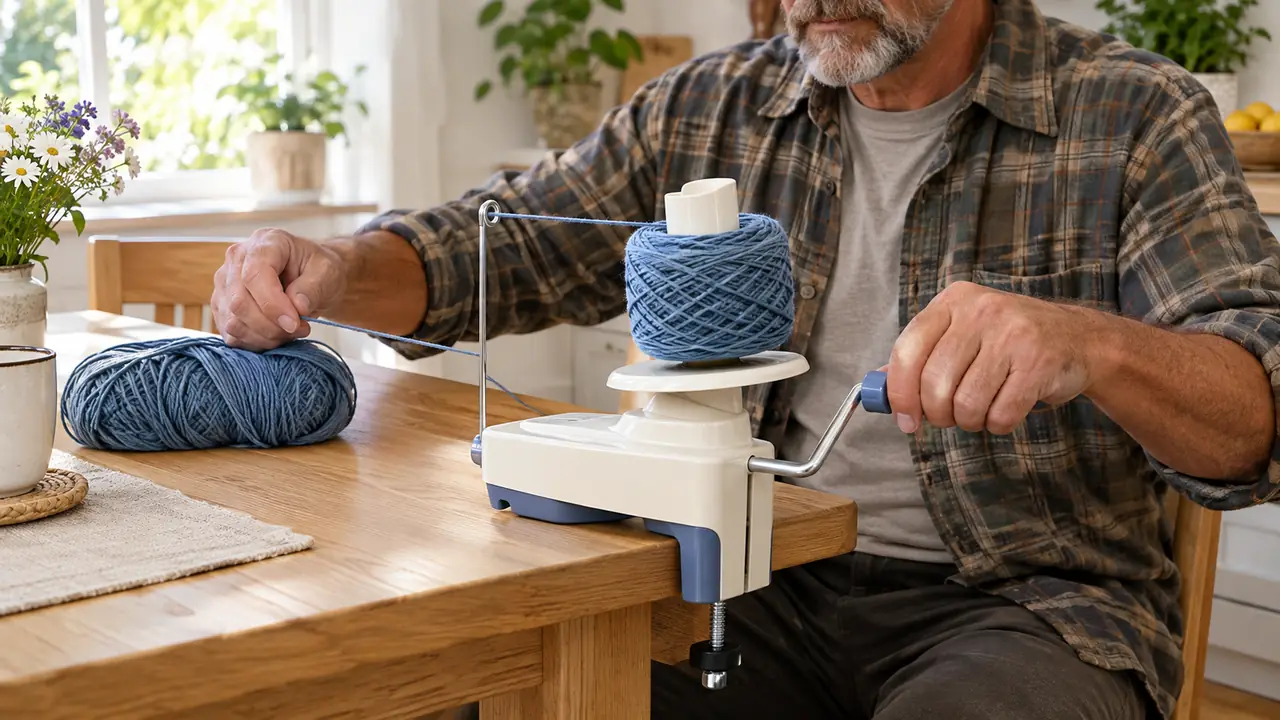
So I finally ordered the Knit Picks yarn winder. I want to be clear about what I expected, because I think a lot of people picture a complicated machine with a learning curve. It is not that. It is a hand-crank winder that clamps to a table, and you feed the yarn through a guide while you turn the handle. That is the whole job. The first time I used it, I wound a full skein into a neat center-pull cake in about three minutes, and I sat back in my chair and laughed at myself for the years I spent wrestling with loose skeins on my lap.
Stop untangling yarn. Start winding it.
The Knit Picks yarn winder turns a loose skein into a neat center-pull cake in about three minutes. Check today's price on Amazon.
Amazon Check Today's Price on Amazon →The first thing I noticed was the grip. I have mild stiffness in my right thumb joint when the weather turns cold, so I was worried about cranking a handle for a whole skein. The handle on the Knit Picks winder is smooth and turns easily, and I did not feel any strain even winding a full skein of worsted weight yarn. My husband Glenn watched me do it and said, well, that looks satisfying, and then he wound the next skein himself just to try it. That is the kind of endorsement that matters in our house.
The other thing that surprised me was how much neater my projects became. When you work from a center-pull cake, the yarn feeds smoothly and evenly, so my tension stayed consistent row after row. I am the person who treats a gauge swatch like a word problem, so I noticed the difference immediately. My stitches were more uniform, my hands were not constantly stopping to untwist the yarn, and I finished the baby blanket in two evenings instead of four. The blanket itself was the same pattern I had made a dozen times. The only change was the winder.
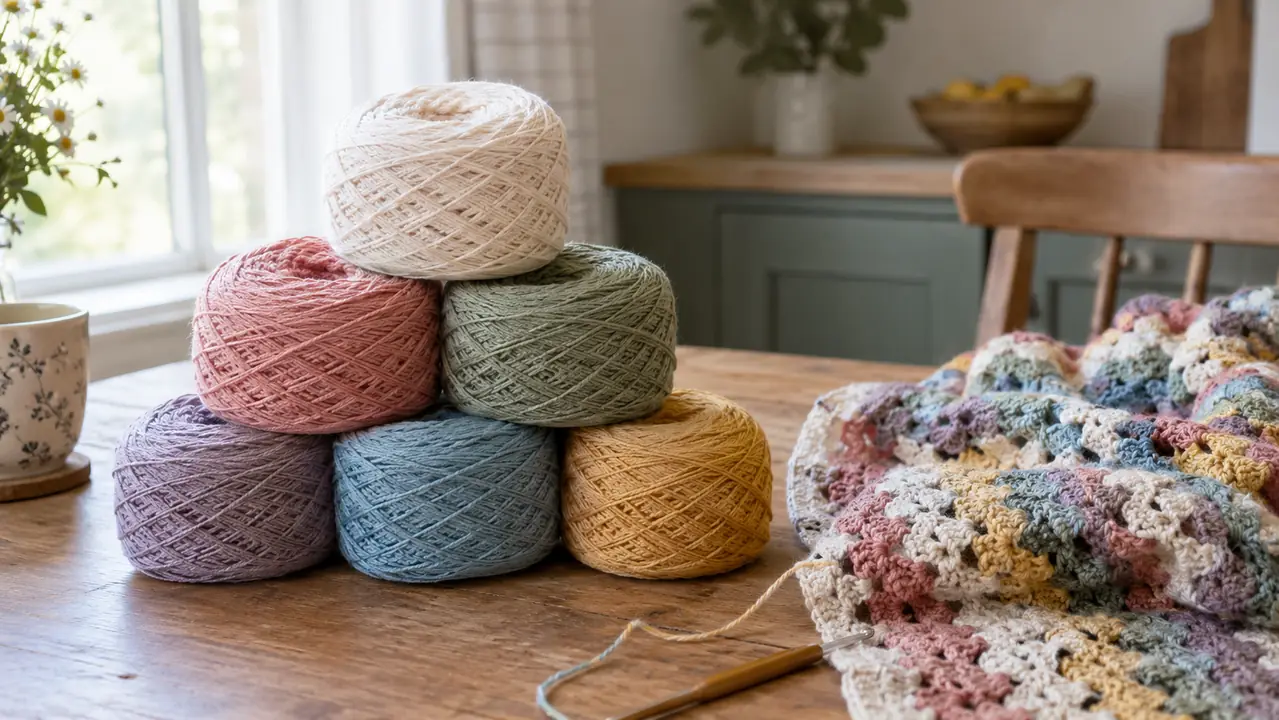
I will be honest about the tradeoffs, because I think you deserve that. The winder clamps to a table, so you need a flat surface and a little bit of setup time. It is not something you leave attached to your recliner. I keep mine on the kitchen table, and I wind a few skeins at a time while I am waiting for water to boil or dinner to finish. It also will not wind a hank unless you have a swift to hold it, so if you buy yarn in hanks, you will want to plan for that. For me, most of my yarn comes in skeins, so the winder handles the bulk of my stash without any extra equipment.
I finished the same baby blanket pattern in two evenings instead of four. The only change was the winder.
I have now used the Knit Picks winder for about four months, through a stack of dishcloths, a hat for a friend, and three more donation blankets. It has held up well. The mechanism is still smooth, the clamp is still tight, and I have not had a single yarn barf, which is the term I use for the tangle that used to live in my lap. I also like that the winder is compact. It lives in a drawer in my kitchen when I am not using it, and it takes up less space than a skein of bulky yarn.
If you are on the fence, here is the way I think about it now. You already spent the money on yarn you like. You already spent the time learning to crochet or knit. The winder is the tool that protects both of those investments. It does not make you faster at the craft itself. It just removes the part of the process that was never fun, the part where you sit in a recliner and untangle a mess instead of making something.
What I'd Tell You If We Were Sitting at My Kitchen Table
If we were sitting at my kitchen table with a cup of tea, I would tell you this: buy the winder before you need it. I waited until a skein collapsed in my lap on a Tuesday night, and I spent forty minutes untangling yarn instead of crocheting. You do not have to make that mistake. The Knit Picks yarn winder is not a fancy gadget. It is a simple, sturdy tool that does one job well, and it will save you more time in the first week than it costs you in setup. I would also tell you to wind your yarn the day it arrives, before you start a project, so you never have to stop mid-row to wrestle with a loose skein. That is the whole trick, and it is not much of a trick. It is just a better way to work.
Give your yarn the treatment it deserves.
The Knit Picks yarn winder is the tool I wish I had bought years ago. Check today's price on Amazon and see for yourself.
Amazon Check Today's Price on Amazon →