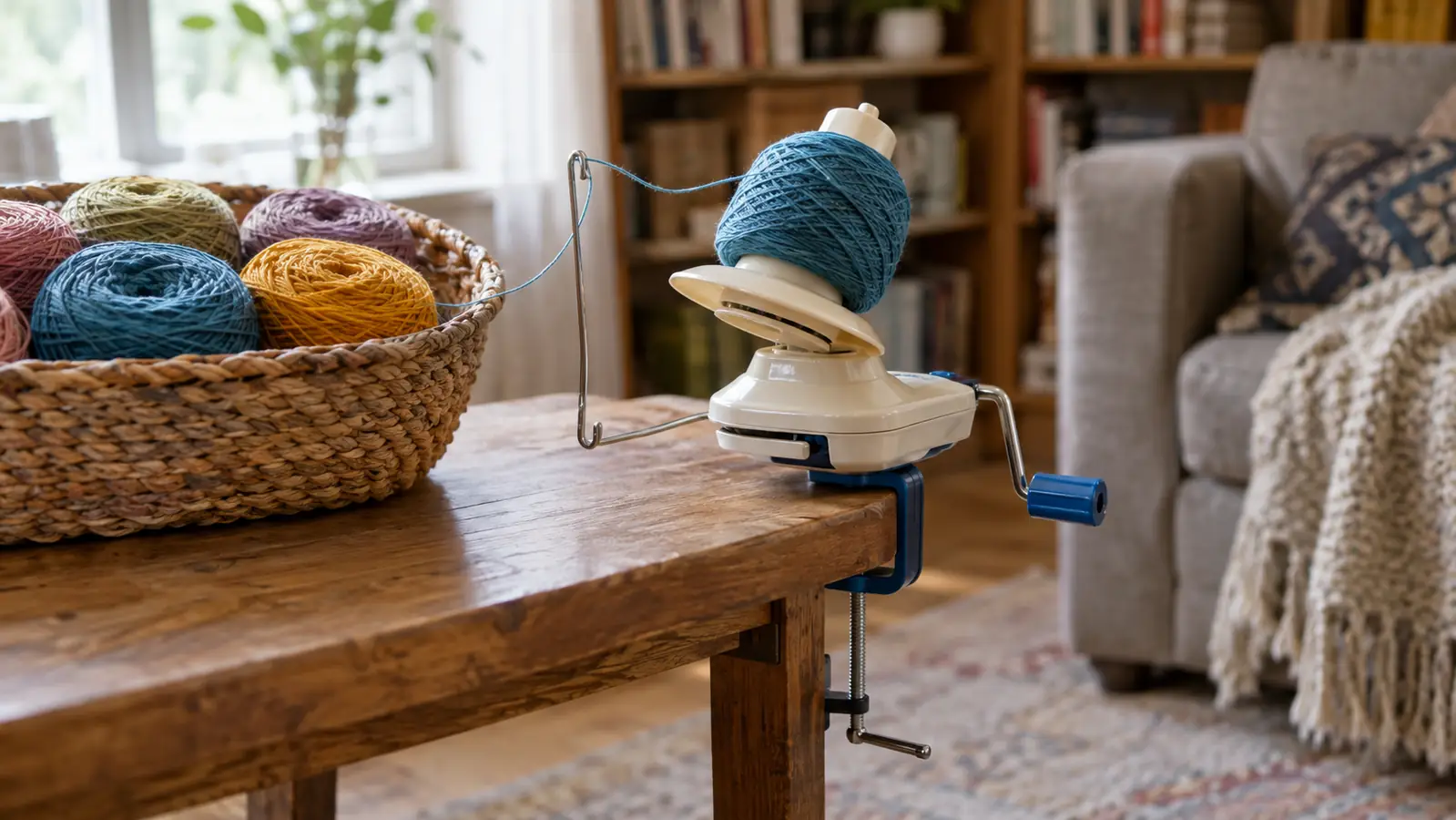
If you crochet from hanks, you know the ritual: you hold the loop open on your knees or a chair back, you wind by hand for twenty minutes, and somewhere around the halfway point the yarn twists into a stubborn knot that was not there before. I have done that dance for thirty years, and I finally bought two yarn winders to see which one actually ends it. The Knit Picks Yarn Ball Winder has been my everyday tool for months. The Olikraft Yarn Winder is the one I borrowed from a friend to test side by side. Same hanks, same tension, same expectations.
The short answer: the Knit Picks winder wins for me because it makes a denser, more stable cake and the crank feels easier on my hands. But the Olikraft is a real contender, and for some crocheters it may be the better buy. Here is the full breakdown. Both are worth a look, but they are built for different crocheters, and I will explain exactly why below.
A little background on why I care so much about winding. For most of my thirty years of crochet, I wound hanks by hand, with the loop stretched over the back of a kitchen chair and my husband Glenn holding the other end when he could be talked into it. A hand wound ball works, but it rolls across the floor, it collapses halfway through a project, and it takes about twenty minutes per hank. With my stiff right thumb, those twenty minutes are not free. So when I finally decided to buy a winder, I wanted to know which of the two most recommended options would actually be kinder to my hands and my yarn.
| Knit Picks Yarn Ball Winder | Olikraft Yarn Winder | |
|---|---|---|
| Cake density | Firm, compact cakes that hold their shape in a basket | Slightly looser cakes that can flatten if stacked |
| Crank comfort | Smooth, low-effort crank that is gentle on a stiff thumb joint | Works fine, but the handle feels a bit thinner and less cushioned |
| Tension control | Consistent tension across the whole cake, even on slippery yarns | Good tension, but I had to slow down on the last quarter of a big hank |
| Setup | Clamps to a table edge up to about 2 inches thick, quick to attach | Clamp works, but the base felt slightly less secure on my kitchen table |
| Price | Mid-range for a winder of this size | Usually a little less expensive |
| Best for | Daily crocheters who wind a lot of hanks and want a dependable workhorse | Occasional winders who want a budget-friendly option for small projects |
Where Knit Picks Wins
The first thing I noticed was the crank. I have mild stiffness in my right thumb joint, especially in cold weather, and the Knit Picks handle is shaped so my thumb sits naturally instead of straining. I wound four 100-gram hanks in one sitting and my hand felt fine afterward. With the Olikraft, I needed a short break after the third hank. That alone would have decided it for me, but the cake quality sealed the deal.
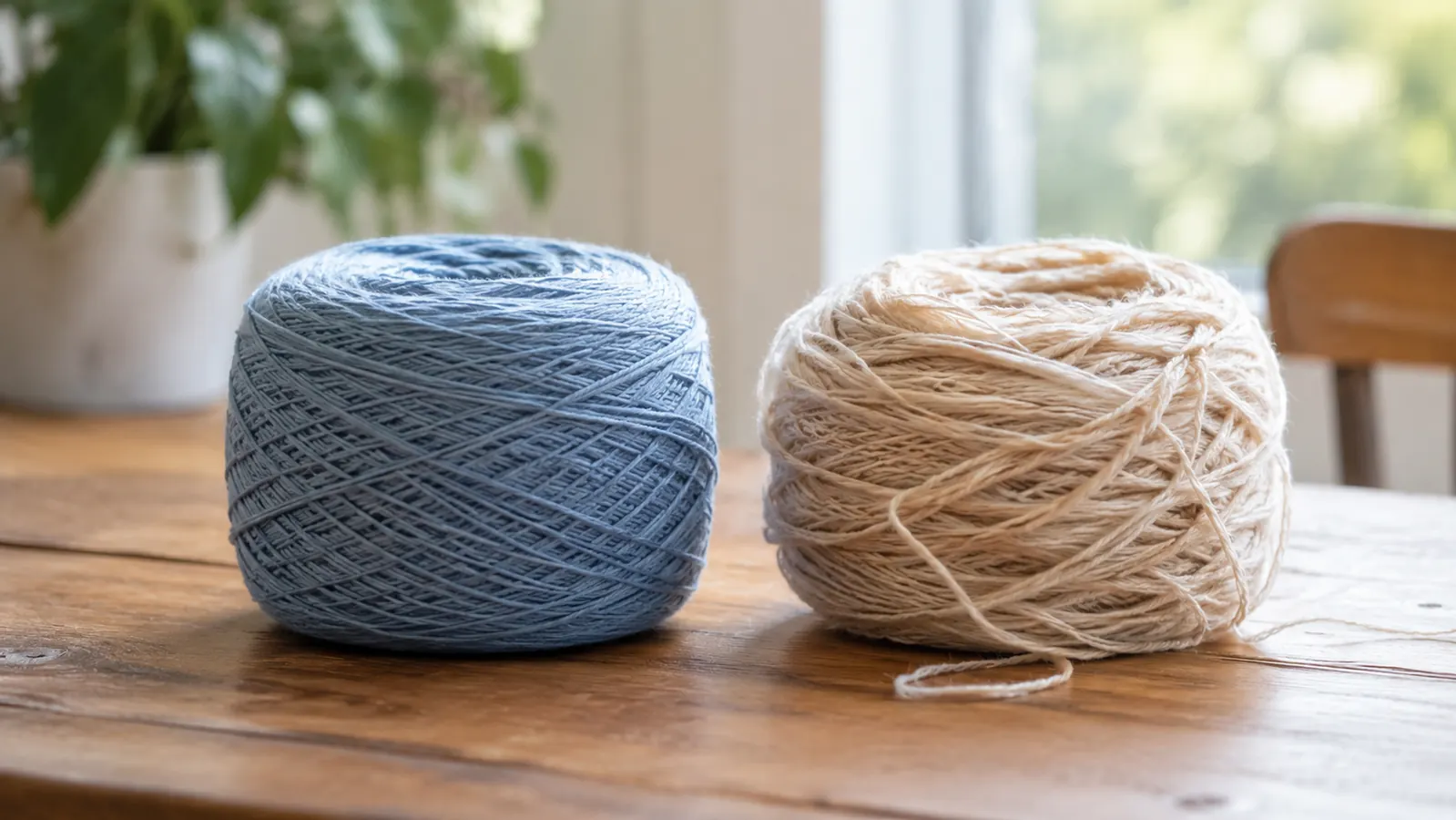
Knit Picks makes a denser cake. When I wind a hank of worsted weight, the finished cake is firm enough to hold its shape in my yarn basket, and the center does not collapse when I pull from the outside. The Olikraft cakes looked tidy at first, but they were noticeably looser. One cake of a soft cotton blend flattened a little after a week under two other cakes. For a person who keeps a stash in baskets, that difference matters.
That density matters most in the middle of a project. A loose cake slumps as it empties, and the strand starts pulling from the outside and the center at the same time, which is how tangles begin. The Knit Picks cakes held their shape down to the last few yards. I could set one in a bowl beside my recliner and pull from the center all evening without it rolling or collapsing, which is exactly what I wanted a winder to do.
I tested both winders on the same three hanks on a Saturday in early March, and I kept a notebook on the kitchen table so I could write down what happened. The first hank was a worsted weight wool in a medium gray, the second was a DK cotton blend, and the third was a single ply that loves to split. I wound each one twice, once on each winder, and I timed myself with the stopwatch on my phone. The Knit Picks finished a full 100-gram hank in about four and a half minutes. The Olikraft took closer to six because I had to slow down whenever the yarn started to catch. On the single ply, the Knit Picks kept the strand flat and even all the way through. The Olikraft let the ply twist on itself twice near the middle of the hank, and I had to stop and untwist it before the yarn would feed again.
I also paid attention to how each winder behaved at the very end of a hank, because that is where my hand-wound balls always fell apart. The Knit Picks pulled the last few yards through smoothly and left a neat tail I could tuck under the outer strand. The Olikraft did the same, but the final layer sat looser, and one cake developed a soft spot on one side where the yarn had not been pulled tight. It did not affect how the yarn crocheted, but it made the cake harder to stack in my basket. Over a month of winding, I found myself reaching for the Knit Picks every single time, even when the Olikraft was sitting right next to it on the table.
The Knit Picks winder also clamps firmly. My kitchen table is old oak with a thick edge, and the clamp tightened down in a few turns and stayed put through a full hank without creeping. When the winder shifts while you crank, the cake comes out lopsided and the yarn tension goes uneven, so a steady base is not a small detail. I also wound on a folding card table once, which is thinner, and it held there too after an extra half turn.
The winder that earned a permanent spot next to my recliner
After months of daily use, the Knit Picks Yarn Ball Winder is the one I reach for every time. It winds firm cakes, it is gentle on my hands, and it has not skipped a beat on any yarn I have tried.
Amazon Check Today's Price on Amazon →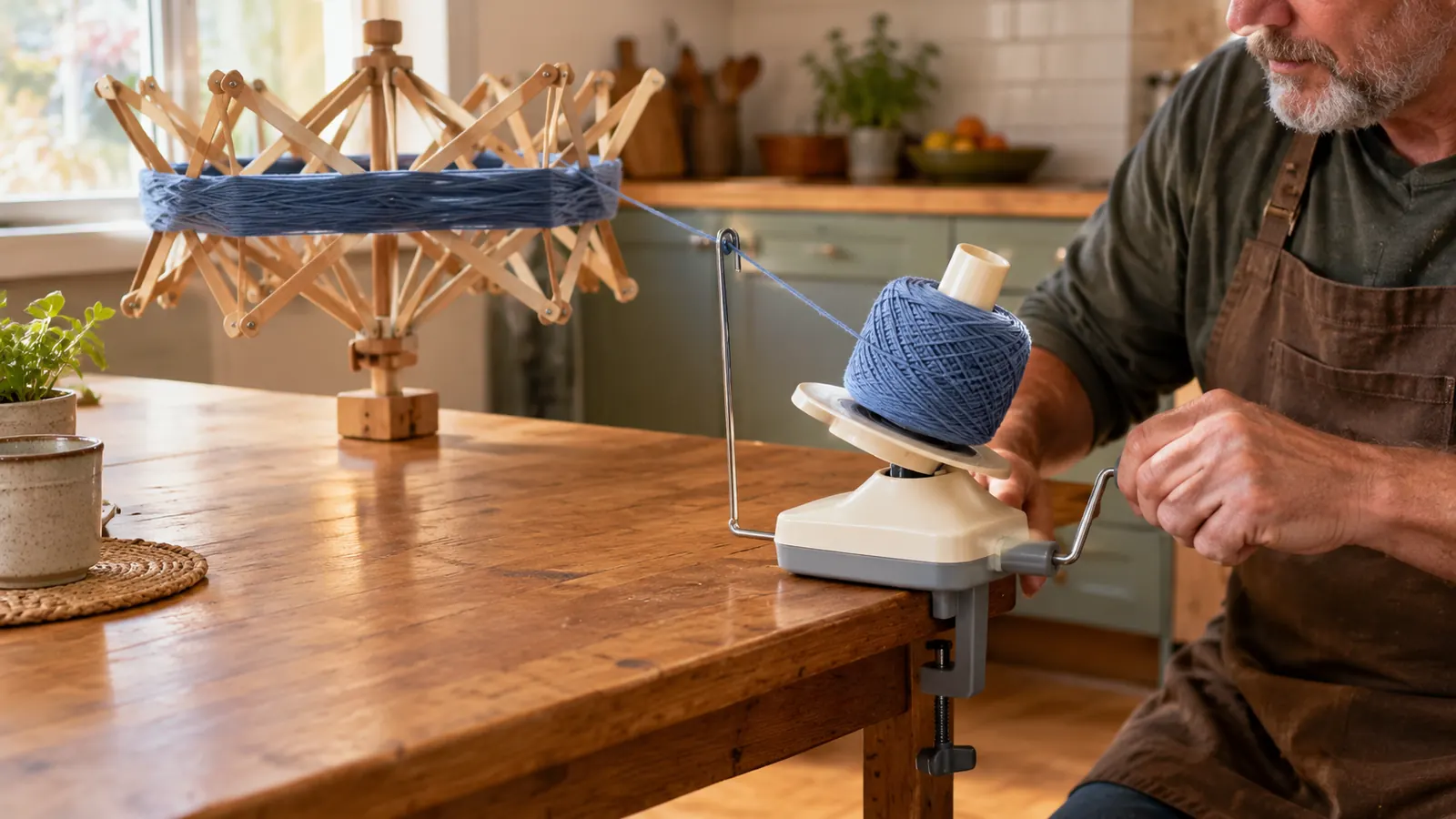
Where Olikraft Wins
I want to be fair, because the Olikraft winder is genuinely good at what it does. It is usually the less expensive option, and for a crocheter who winds a hank every couple of weeks rather than every day, it is a perfectly reasonable choice. It handled worsted weight and DK yarns without tangling, and the cakes, while looser, were still perfectly usable. If I were buying a first winder on a tight budget, I would not feel shortchanged.
In fairness to the Olikraft, the difference in cake density will not matter to everyone. If you mostly crochet from commercial skeins that are already center-pull, and only wind the occasional hank of hand dyed yarn, either winder will save you the twenty minutes of chair-back winding. The bigger question is how often you will reach for it.
The Olikraft also has a slightly smaller footprint, which makes it easier to store in a drawer or tote bag. I kept it in a project bag for a week and it traveled well. The Knit Picks winder lives on a shelf in my living room, and while it is not huge, it is not something I would toss in a bag. If portability is your priority, the Olikraft has a real edge.
There is one more place the Olikraft surprised me, and it is the reason I did not send it back to my friend after the first week. The clamp opens wider than I expected, and it gripped the rounded edge of my kitchen table without wobbling, even though that table has a lip underneath. I had assumed the thinner base would make it feel tippy, but it did not. On a smooth, flat surface it was actually quieter than the Knit Picks, which has a faint clicking sound as the gears turn. If I were winding late at night while Glenn watched television, I would pick the Olikraft just to keep the noise down.
The Olikraft also handled small skeins better than I expected. I wound a partial skein of leftover fingering weight that had been sitting in my stash for years, the kind of yarn that usually fights back, and it came out as a tidy little cake with no drama. The Knit Picks did the same job, but it felt like more machine than the project needed. For a crocheter who mostly works with leftovers and small partial skeins, the Olikraft is the more proportionate tool.
The Olikraft also feels a little more forgiving when you are just learning. The crank turns smoothly, the guide arm is easy to thread, and the instructions were clear enough that I had a decent cake on the first try. If you are someone who gets frustrated by fiddly tools, that gentle first experience is worth something, and it may keep you winding long enough to see the benefit.
Who Should Buy Which
Buy the Knit Picks Yarn Ball Winder if you crochet often, if you wind hanks in batches, or if your hands get tired with smaller handles. It is the winder I use for my church donation blankets and baby gifts, and it has held up through months of steady use. The firmer cakes also make a real difference if you store yarn in baskets or on shelves where loose cakes tend to flatten.
Buy the Olikraft if you are new to winding, if you only wind a hank now and then, or if budget and portability matter more than cake density. It is a solid tool that will serve you well for small projects. Just know that if you fall in love with winding, you may eventually want the firmer cakes and the smoother crank of the Knit Picks.
If you are still deciding, think about where the winder will live. Mine sits on a shelf in the living room, next to the floor lamp by my recliner, because that is where I do most of my crocheting. The Knit Picks is the one I reach for without thinking. The Olikraft is the one I would pack for a weekend at my sister's house or hand to a friend who is just starting to buy yarn in hanks. Both are good tools. They are good in different ways, and the right one depends on how often you wind and how much you care about a cake that holds its shape.
My Knit Picks winder lives in a shoebox in the hall closet with its clamp and a small yarn swift. When a new hank comes in the mail, the whole setup takes about two minutes to put together on the kitchen table and about the same to put away. That ease is what keeps me using it, and it is the same reason I would tell anyone with tender hands to buy the winder that cranks most comfortably for them, because a tool that hurts to use ends up in the closet for good.
Start winding firmer, neater cakes today
The Knit Picks Yarn Ball Winder is the tool I trust for every project. See today's price on Amazon and see why it earned a permanent place in my living room.
Amazon Check Today's Price on Amazon →