
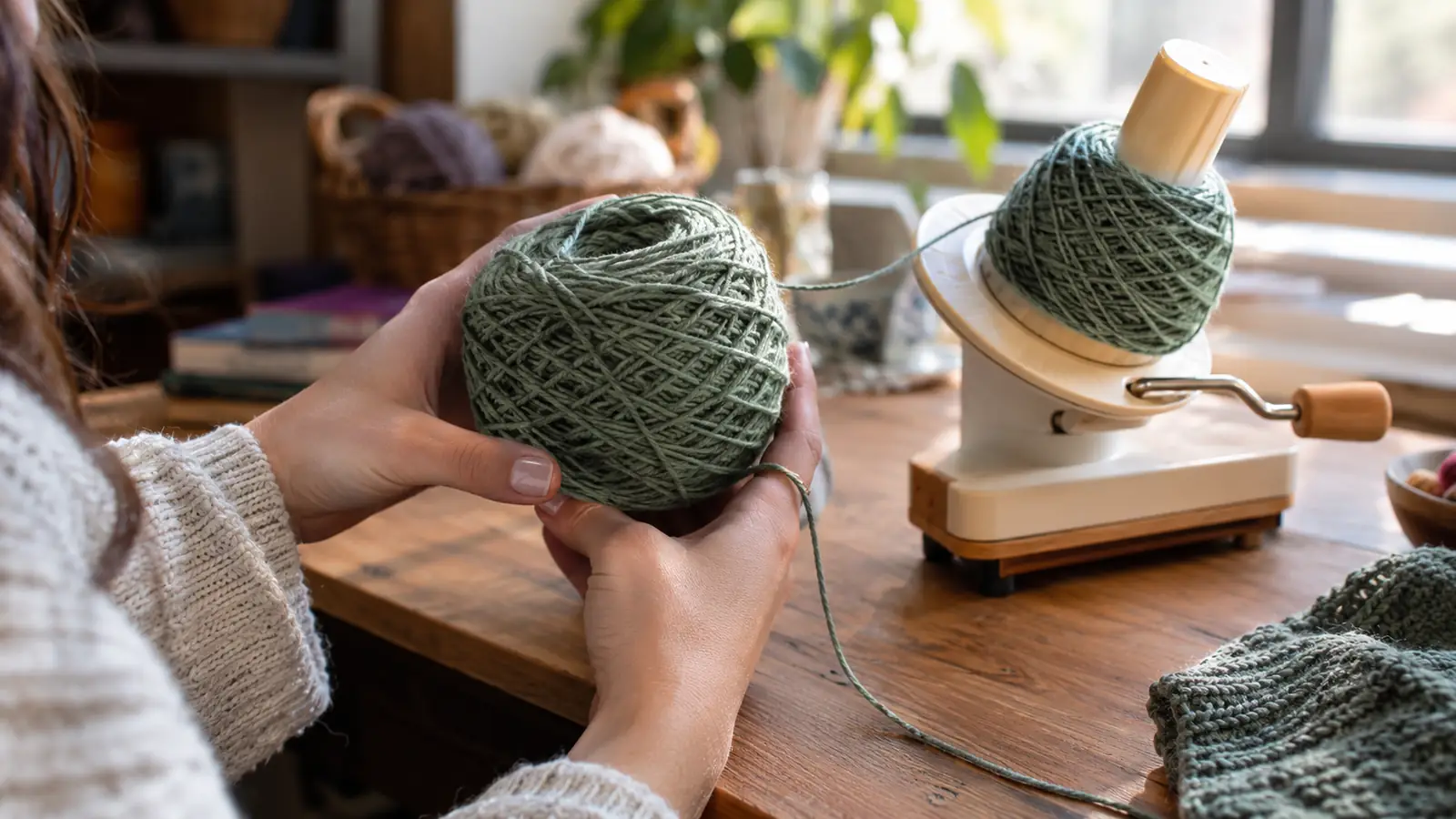
I have been crocheting for about 30 years, and for most of that time I wound yarn by hand. I would sit in my recliner, hold a skein between my knees, and wrap and wrap until my right thumb complained. Last fall I finally bought the Knit Picks Yarn Ball Winder, and I have wound hundreds of center-pull balls since. This is the long-term review I wish someone had written for me before I spent the money.
The Quick Verdict
The Knit Picks Yarn Ball Winder is a sturdy, easy-to-use tool that turns messy skeins into neat center-pull balls in about a minute. It is not perfect, but for a crocheter who works with lots of yarn, it earns its place on the table.
Amazon Check Today's Price →Stop wrestling with tangled skeins
If you spend more time untangling yarn than crocheting, a ball winder pays for itself in patience. See today's price on Amazon and check the current color options.
Amazon Check Today's Price on Amazon →How I've Used It
I have had the Knit Picks Yarn Ball Winder since early last fall, and I have used it on nearly every project since. My usual projects are blankets, dishcloths, hats, and baby gifts for my church's donation drive, so I wind a lot of worsted weight and DK yarn. I have also wound fingering weight, bulky yarn, and a few skeins that were already half-used and tangled.
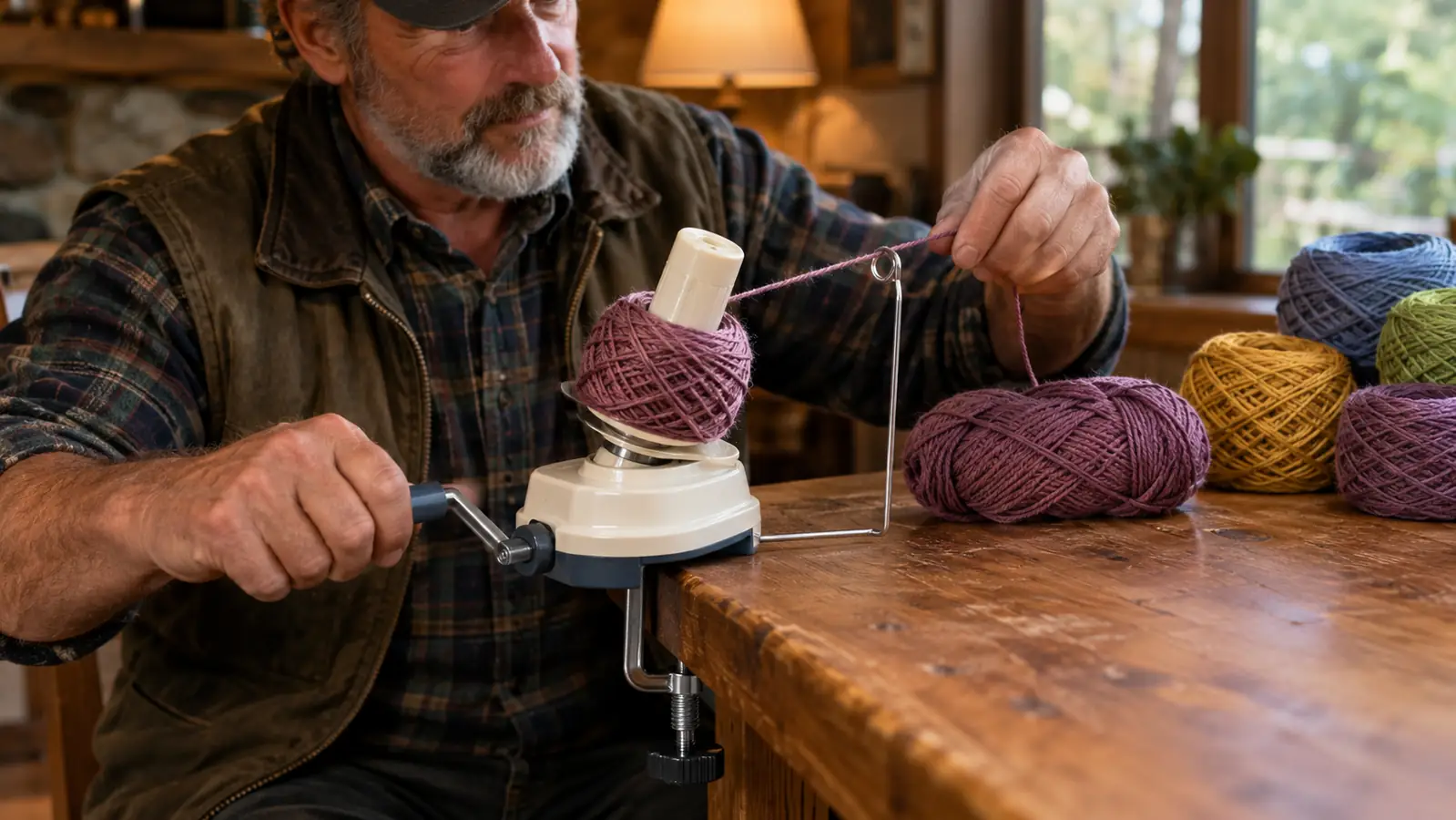
My setup is simple. I clamp the winder to my kitchen table, put a skein on a yarn swift, and wind. The clamp is padded and it has not scratched the table. I have wound maybe 300 balls total, and the mechanism still turns smoothly. The gears have not slipped, and the tension has stayed consistent from the first ball to the most recent one.
I keep the winder on the table rather than packing it away, because I reach for it more often than I expected. A skein that comes out of the bag looking tidy can still hide a knot in the middle, and winding it first means I find the problem before I am three rows into a blanket.
One evening in late October I decided to count exactly what I was saving. I timed myself on a full 100-gram skein of worsted weight: one minute and forty seconds from the moment I slipped the loop over the swift to the moment the ball dropped off the winder. By hand, the same skein took me just over eleven minutes, and my thumb ached for the rest of the evening. That math is what convinced me the winder was not a luxury. It was a tool I should have bought a decade earlier.
What Makes a Good Yarn Ball Winder
A yarn ball winder has one job: turn a loose skein into a compact center-pull ball. The Knit Picks Yarn Ball Winder does that job with a metal gear mechanism and a plastic body. The gears are what matter most. Cheaper winders often use plastic gears that skip under tension, and a skipped gear means a loose, uneven ball that collapses as you work from it.
The Knit Picks winder uses a 10:1 gear ratio, which means the arms rotate ten times for every turn of the handle. That ratio is what makes the balls come out dense and even. I have wound a few balls by hand out of curiosity, and the difference is obvious. A hand-wound ball is soft and floppy. A winder ball is firm enough to hold its shape in a project bag.
The winder handles yarn weights from lace to bulky. I have wound a delicate fingering weight for a baby blanket and a chunky wool for a winter hat, and both came out clean. The tension knob on the side lets you adjust for thinner or thicker yarn, and once I found the right setting for worsted weight, I barely touched it again.
I should say what I mean by a good ball, because I am picky about this. A good center-pull ball has a firm outer layer, a hollow center you can find with one finger, and no loose loops hanging off the sides. I have wound maybe forty balls with the tension knob at each of its settings, and the difference is real. Too loose and the ball squashes flat in a project bag. Too tight and the yarn stretches as it feeds out. The middle setting has been right for worsted weight, and I have only had to nudge the knob when I switch to a very different yarn.
Performance Over Time
The real test of any tool is how it behaves after months of use, not on day one. After roughly 300 balls, my Knit Picks Yarn Ball Winder still feels like new. The handle turns smoothly, the gears do not grind, and the clamp holds firm. I have not had to tighten a single screw.
The one thing I have noticed is that the plastic body flexes slightly if I push the yarn in too hard while winding. It has never cracked or broken, but I have learned to let the winder do the work instead of forcing the yarn toward the base. That is a habit, not a repair.
I also appreciate that the winder is easy to clean. Yarn dust collects around the base after a long session, and I can wipe it off with a dry cloth. There is no oiling schedule and no special maintenance. I just use it and put it back on the table.
The only real wear I have seen is on the yarn guide arm, where the yarn rubs as it travels up to the ball. After a few hundred balls there is a faint polished line in the plastic, but it is smooth to the touch and it has not developed any burr that could snag a strand. I checked it with a fingernail the way I check a hook for a rough spot, and it is still perfectly smooth. I expect that arm to outlast the rest of the winder, and if it ever does wear down, the part is simple enough that I would not hesitate to replace the whole tool after this many years of service.
After roughly 300 balls, the handle still turns smoothly and the gears have not slipped once. That is the kind of consistency I want from a tool I use every week.
Where It Shines
The Knit Picks Yarn Ball Winder shines brightest with thrift store and hand-me-down yarn. I have bought plenty of secondhand skeins that looked fine in the bag but hid tangles and knots. Winding them first means I find every problem before I start crocheting, and I can rewind a tangled skein into a usable ball in about a minute.
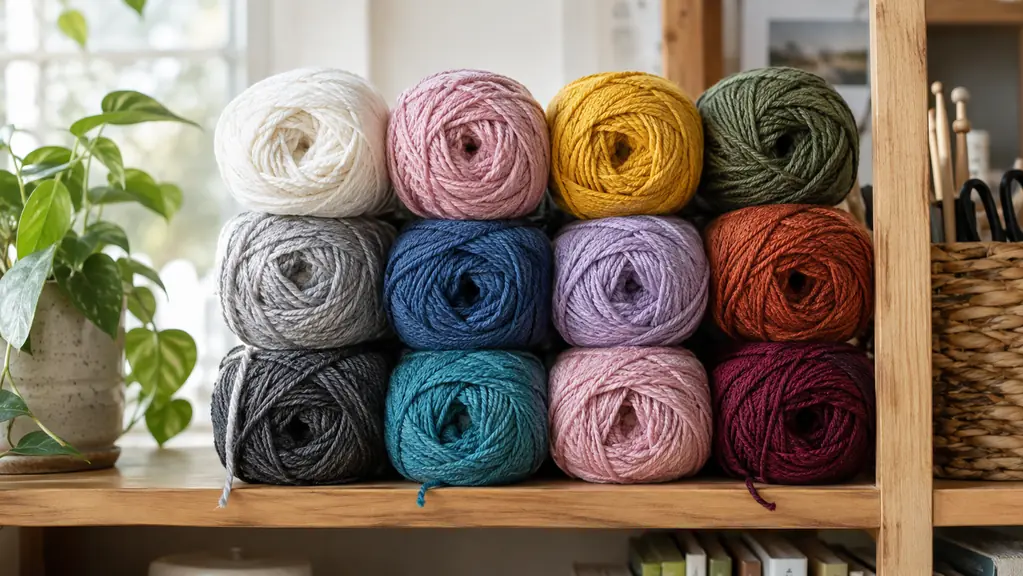
It also shines with half-used skeins. I have a basket of leftovers from finished projects, and they used to sit there because winding them by hand was not worth the trouble. Now I wind them into neat little balls and they actually get used. My donation-drive baby hats have never had a better supply of coordinating scraps.
The center-pull design is another win. A center-pull ball sits flat in a bowl or bag, and the yarn feeds out without rolling around. I crochet in a recliner with a floor lamp beside me, and the ball stays put on the arm of the chair. That is a small thing, but it adds up over a long evening of crocheting.
One Saturday in January I wound eleven balls in a single sitting, working through a bag of mixed leftovers a friend had given me. The winder handled every one of them, from a few yards of lace weight to a full skein of bulky wool. The bulky yarn filled the ball to the edge of the arms, and I had to slow down and feed it more gently, but it never jammed and the ball came off clean. That is the kind of session that convinces me the tool is doing real work, not just looking nice on a shelf.
Where It Falls Short
No tool is perfect, and the Knit Picks Yarn Ball Winder has a few honest limitations. The first is capacity. The winder handles up to about 100 grams of yarn, which covers most standard skeins. But a bulky 200-gram skein has to be split into two balls, and that is a minor annoyance when I want to start a project right away.
The second limitation is the clamp. It works well on my kitchen table, which is about an inch and a half thick. On a thinner table or a desk with a lip, the clamp can struggle to get a solid grip. I have not had it slip during use, but I can see how a different table could make it less stable.
The third is the handle. It is comfortable for me, but I have mild stiffness in my right thumb joint in cold weather, and after a long winding session I do feel it. The handle is smooth plastic, and a softer or textured grip would be easier on my hand. It is not a dealbreaker, but it is worth knowing if you have hand pain.
I also want to be honest about the learning curve. The first time I used the winder, I fed the yarn in at the wrong angle and the ball started to build unevenly, with a bulge on one side. I stopped, unwound the few yards I had put on, and started again with the yarn coming off the swift at a gentler angle. It took me three tries before I understood how the yarn wants to travel. Once I figured that out, every ball after it came out even. A beginner should expect to waste one small skein worth of patience on that first afternoon, and then it becomes second nature.
What I Liked
- Metal gears that stay smooth after hundreds of balls
- Makes dense, even center-pull balls in about a minute
- Handles yarn weights from lace to bulky
- Padded clamp that does not scratch the table
- Easy to clean and needs no maintenance
Where It Falls Short
- 100-gram capacity means bulky skeins must be split
- Clamp can struggle on very thin tables
- Smooth plastic handle is hard on stiff hands
- Plastic body flexes slightly under heavy pressure
Who This Is For
This winder is for crocheters and knitters who work with enough yarn that hand-winding has become a chore. If you buy yarn in skeins, if you shop thrift stores for secondhand yarn, or if you have a basket of leftovers that never gets used, the Knit Picks Yarn Ball Winder will save you time and frustration. It is also a good fit for anyone who wants neat, portable center-pull balls for travel or project bags.
I would also point a newer crocheter toward it, with one caveat. When I started, I wound every ball by hand because I did not know any better, and I assumed a winder was for people with bigger stashes than mine. The truth is that a winder saves the most time when your stash is small, because every yard counts and a tangled skein can ruin an evening. If you are on the fence and you have already wound three skeins by hand this month, you are exactly the person this tool is for.
Who Should Skip It
Skip it if you mostly work from ready-to-use balls or if you only wind yarn a few times a year. A winder is a tool you reach for often, and if it sits in a drawer for months, it is not earning its place. Skip it too if you regularly work with very bulky yarn in large quantities, because the 100-gram capacity will force you to split every skein. And if you have significant hand pain, try turning one in a store before you buy, because the smooth handle may not be comfortable for you.
I would also say this: if you already own a winder that works, even a cheap one, you do not need this one. The Knit Picks Yarn Ball Winder is a step up in smoothness and durability, but it will not change the way your yarn behaves. It will just make the winding part of your week a little more pleasant. That is worth something, but it is not worth replacing a tool that is still doing its job.
The winder I reach for every single week
After hundreds of center-pull balls, the Knit Picks Yarn Ball Winder is still the tool I grab first. Check today's price on Amazon and see if it fits your craft room.
Amazon Check Today's Price on Amazon →