
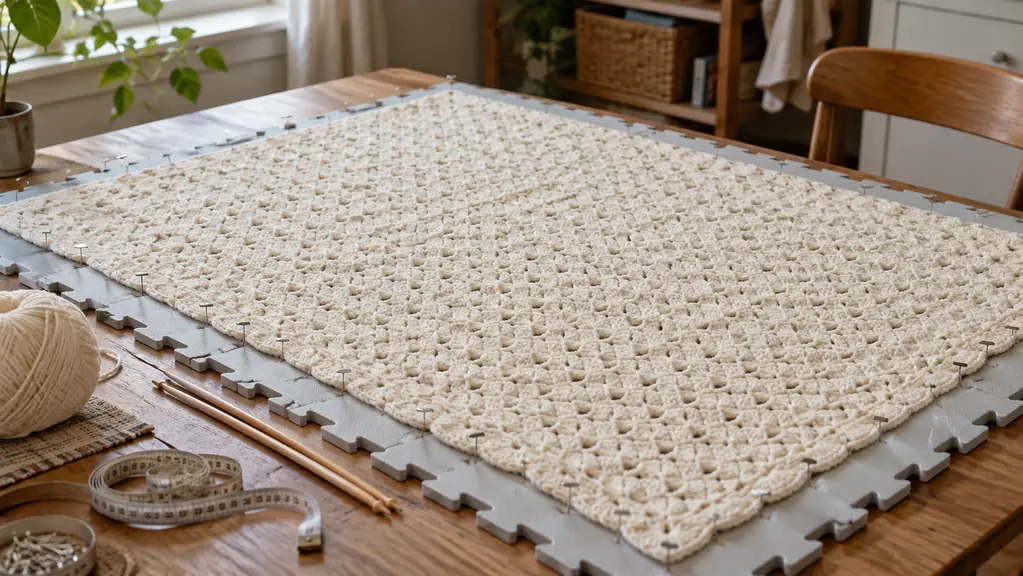
I have crocheted for about 30 years, and for most of that time I finished a blanket, held it up, sighed, and called it done. The edges waved. The corners curled. The stitches looked perfectly fine up close, but the whole piece had a rumpled, homemade look that no amount of yarn could fix. Then a friend at my yarn shop table talked me into trying a set of KnitIQ blocking mats, and the first time I pinned a finished shawl out flat, I actually said out loud, "Oh, that is what it is supposed to look like."
The fastest way to make your crochet look finished
A set of KnitIQ blocking mats turns wavy edges and curled corners into crisp, even lines in one afternoon. If you have ever finished a project and wished it looked more polished, this is the tool that gets you there.
Amazon Check Today's Price on Amazon →Straight edges without wrestling the yarn
Before blocking mats, I pinned pieces to a towel on my bed and hoped. The towel shifted, the pins pulled out, and the edge I had just straightened wrinkled somewhere else. One Saturday last fall I spent two hours chasing a single blanket edge around that towel, and by the end I was ready to give the whole project away. KnitIQ mats interlock into one solid surface, so the whole piece stays put while you work. You pin once, check the line, and it holds. For a math teacher, there is something deeply satisfying about a straight line that stays straight.
Corners that lie flat instead of curling up
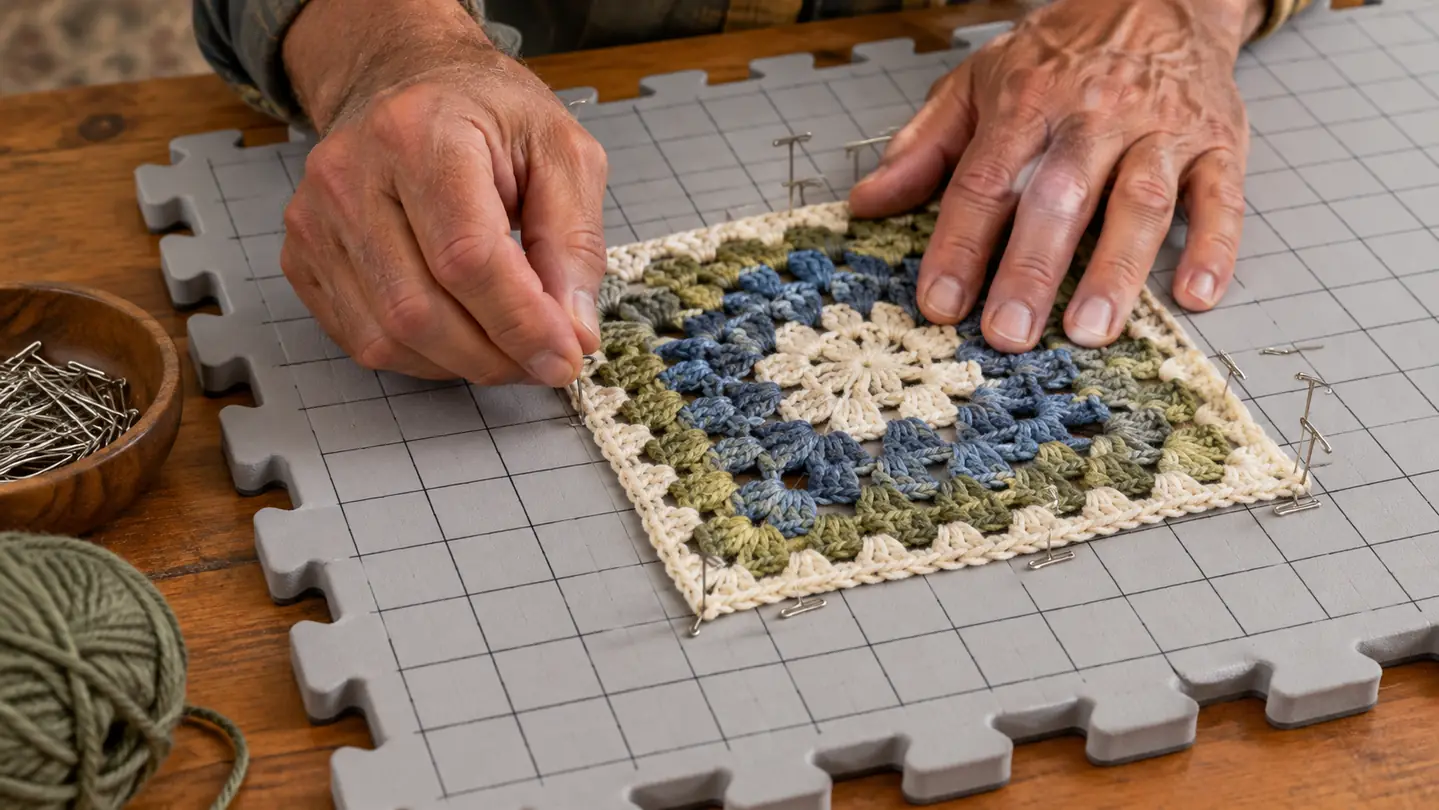
Curled corners are usually a tension problem, but you cannot fix tension on a finished piece. What you can do is wet block it and pin the corners out. The mats give you enough surface to pin each corner with two or three T-pins, and once the piece dries, the corner stays where you put it. I have fixed baby blankets that looked like they had been folded in a drawer for a decade. Last month I blocked a granny square blanket for the church donation drive, and every one of the sixteen corners came out square on the first try.
Stitches open up and look neater
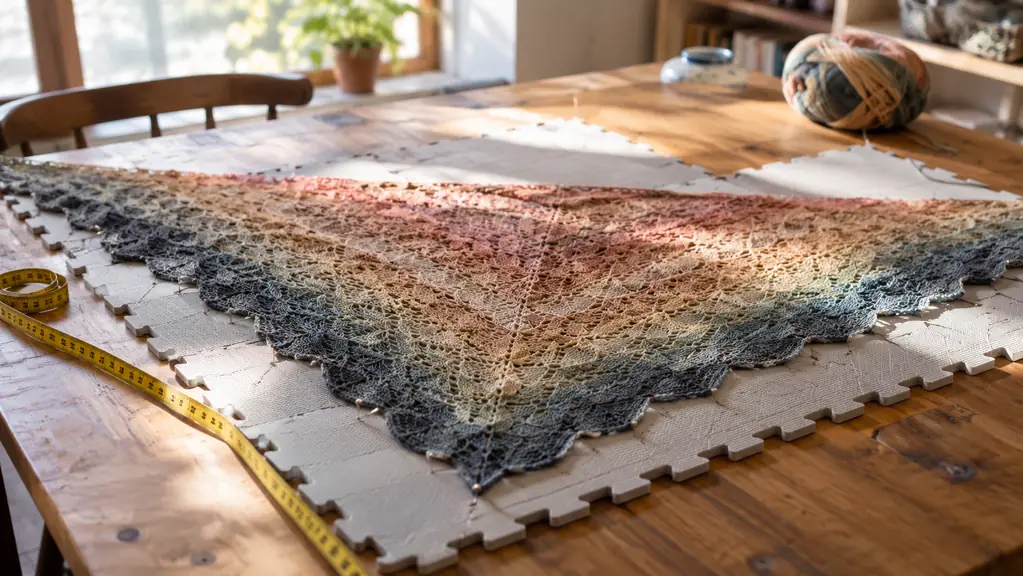
Blocking does not change your stitch count, but it changes how the stitches read. When a piece is pinned out, each stitch has room to settle into its full shape. Lace opens up, shells stop squishing together, and the fabric looks like the pattern photo instead of a lumpy approximation. The first time I blocked a lace shawl, I counted the same number of stitches I had counted before blocking, and they simply looked like a different, better fabric. I measured the shawl at 58 inches across before blocking and 64 inches after, all from the same stitch count, just spread out the way the pattern intended.
Your gauge swatch finally tells the truth
I am the person who measures a swatch, writes down the number, and then ignores it. Blocking mats changed that because they made me block the swatch the same way I block the finished piece. A swatch pinned to the mat and measured after drying gives you a gauge you can actually trust. For anyone who has ever made a sweater that fit like a sack, this alone is worth the price. I keep a little notebook with the before and after numbers, and the difference is usually half a stitch per inch, which adds up fast across a whole sweater.
Seams and joins lie flat for a cleaner finish
When you join granny squares or sew panels together, the seam is often the bumpiest part of the finished piece. Blocking the assembled top flattens those joins so the eye moves across the fabric instead of stopping at every ridge. I make a lot of donation blankets for my church, and the difference between a blanket that looks handmade and one that looks hand-finished is usually twenty minutes on the mats. I pinned one blanket with twelve joined squares, let it dry overnight, and the next morning the seams were nearly invisible.
No more pinning into the carpet or the couch
Before I owned mats, I blocked a doily on a spare bedroom carpet and spent an hour on my knees with a ruler. The KnitIQ mats give me a flat, portable surface that I can set up on my kitchen table and put away when I am done. The grid lines on the mats also help me check that opposite edges match, which is the kind of thing a retired math teacher notices and appreciates. I measured a blanket at 40 inches on one side and 40 and a quarter on the other, and the grid made it easy to ease that quarter inch out before the piece dried.
Pins hold firmly without tearing the yarn
The foam in these mats is dense enough to hold T-pins at an angle without popping out, but soft enough that the pins slide in easily. I have blocked delicate lace and sturdy worsted weight on the same set, and neither one snagged or tore. That matters to me because my hands get stiff in cold weather, and fighting with pins that will not stay put is the fastest way to make me put a project down. On a cold January morning, I blocked a lace doily without a single pin slipping, which is more than I can say for my old towel method.
You can block multiple pieces at once
The nine mats in the standard KnitIQ set interlock into one large surface, which means I can lay out a full blanket or several squares side by side. When I am making a batch of dishcloths or a set of hats for the donation drive, I can pin everything at once and let it dry together. That is the difference between blocking as a chore and blocking as part of the routine. Last spring I blocked six dishcloths in one session, and they all dried to the same size, which never happened when I did them one at a time on a towel.
Reusable for years, not a one-project supply
I have had my KnitIQ mats for long enough that they have been through dozens of projects, and they still interlock tightly and hold pins the same way they did on day one. A little yarn fuzz collects on the surface, and a damp cloth wipes it off. Compared to the cost of the yarn in one good blanket, the mats pay for themselves quickly and keep working project after project. I have used mine for three years now, through blankets, shawls, doilies, and dishcloths, and the edges still line up exactly the way they did the first week.
Finished pieces look like they came from a pattern book
This is the reason that matters most to me. When I pin a finished piece on KnitIQ blocking mats, let it dry, and unpin it, the fabric holds its shape. Edges are straight, corners are square, lace lies open, and the whole piece looks intentional. People ask me how I got the blanket to look so even, and the honest answer is that I did not do it with my hook. I did it with a set of foam mats and an afternoon of patience. The first time Glenn saw me pinning a shawl on the kitchen table, he asked if I was making a puzzle, and when I unpinned it the next morning he said it looked like it came from a store.
What I'd Skip
If you only crochet small items that you never plan to block, like a quick hat you are going to wear immediately, you can skip the mats and nobody will know the difference. I would also skip them if you are not willing to wet block or steam block in the first place, because the mats only help if you actually use them. And if you already have a blocking board setup that works for you, there is no reason to switch. The KnitIQ mats are a tool for people who want finished pieces to look polished, not a magic solution that fixes sloppy work on its own.
The first time I pinned a finished shawl out flat, I actually said out loud, "Oh, that is what it is supposed to look like."
Give your next finished piece the professional finish it deserves
Whether you are blocking a lace shawl, a donation blanket, or your very first sweater, a set of KnitIQ blocking mats makes the difference between handmade and hand-finished. They are reusable, easy to store, and they work with the pins you already own.
Amazon Check Today's Price on Amazon →